
Last updated November 15, 2026
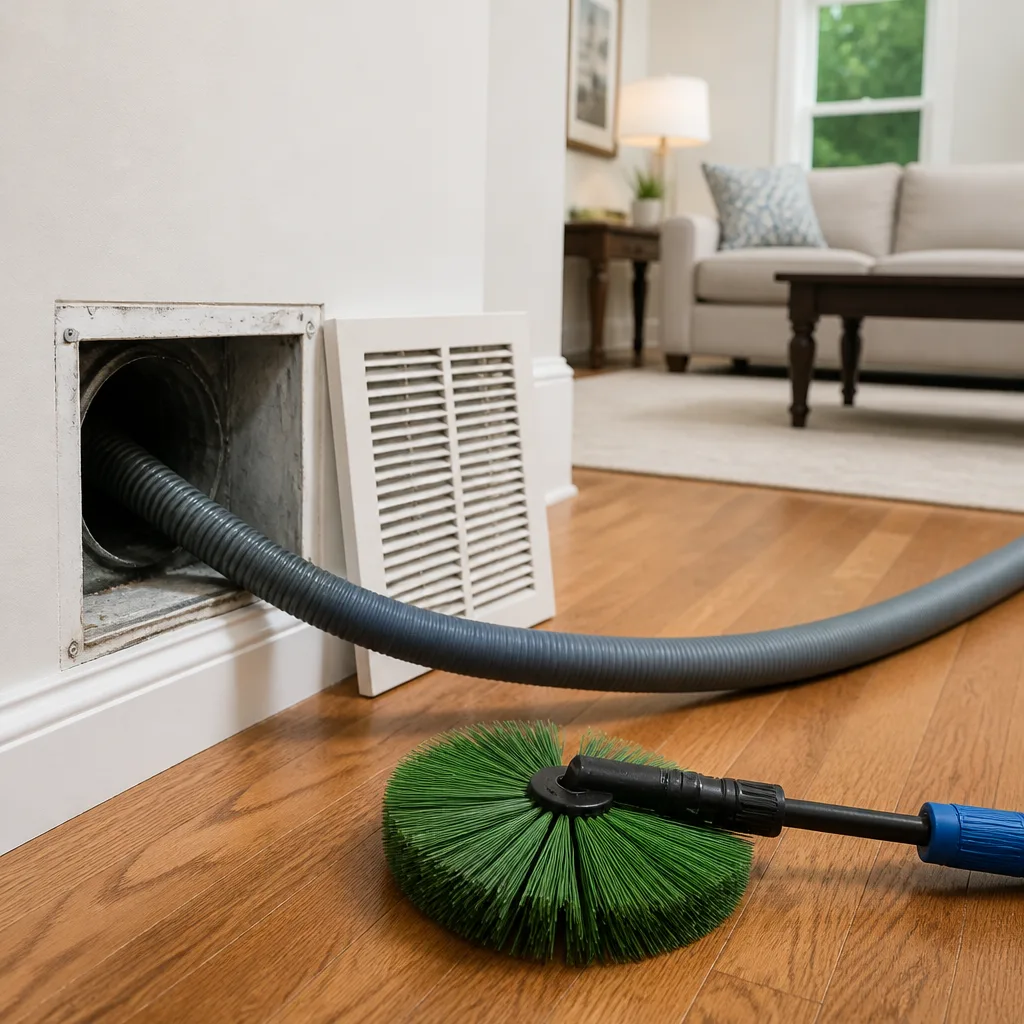 Whole-home duct cleaning
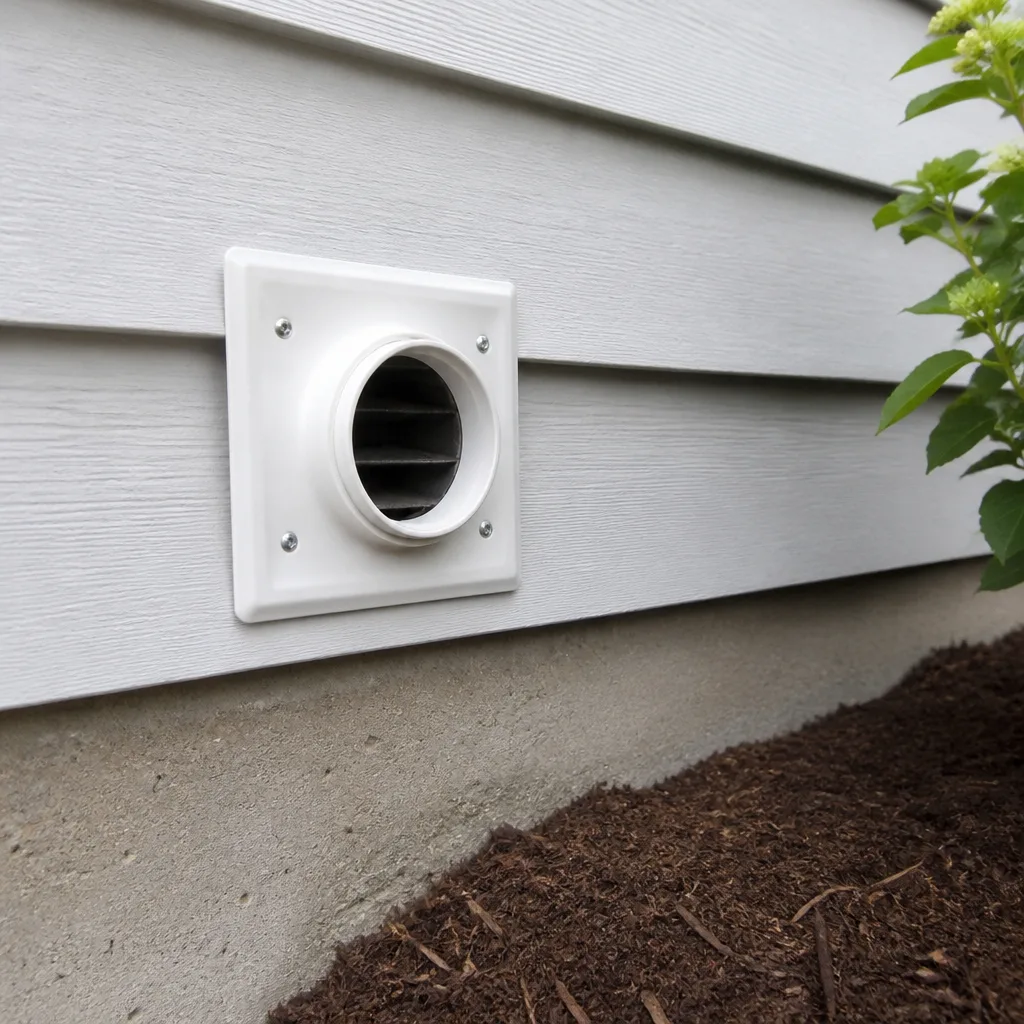 Dryer vent cleaning
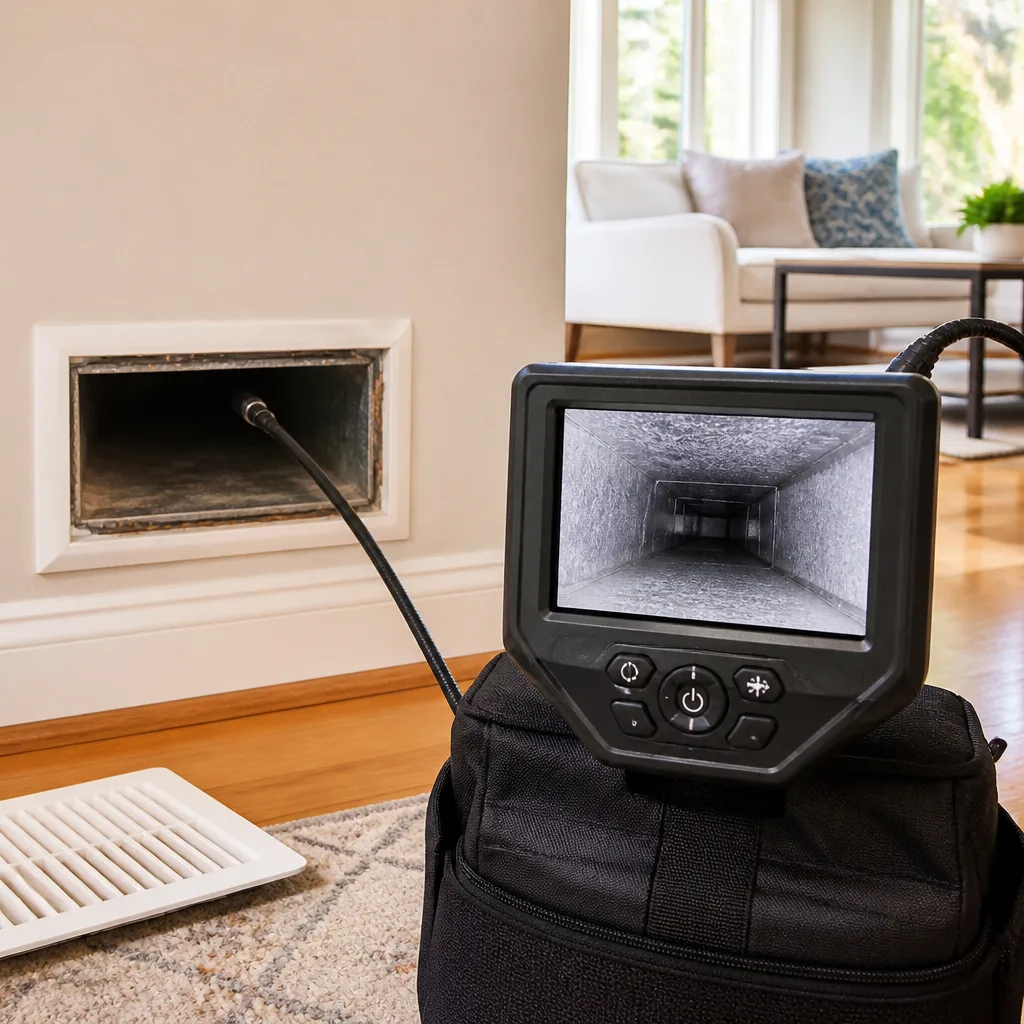 Camera inspection
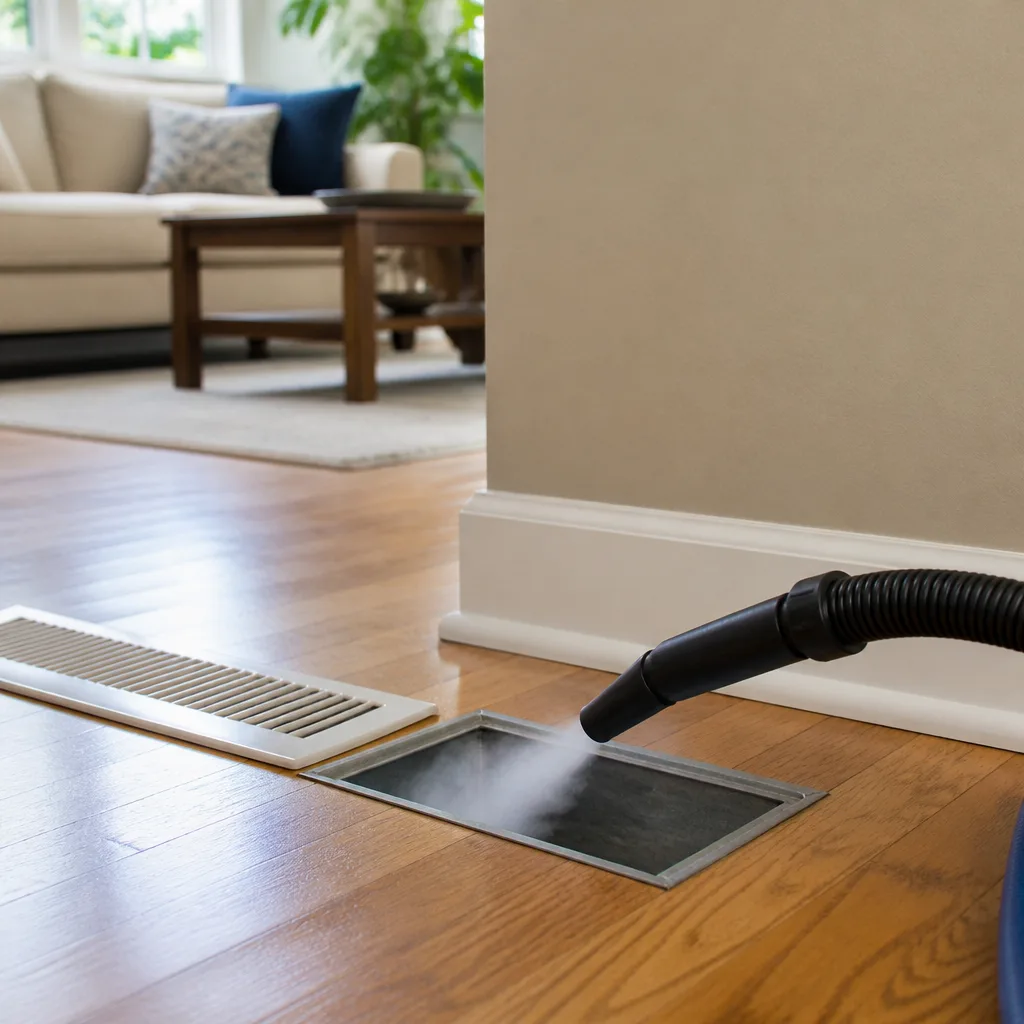 Sanitizing & deodorizing
Whole-system duct and dryer vent check with before-and-after photos - you see exactly what came out of your vents
That "$99 whole-house special" is a bait ad - the real number appears once they are in your hallway, or the "clean" is a shop-vac at the register. We photograph the inside of your ducts before and after instead.
Air Duct Cleaning Troubleshooting in Arlington: Common Problems and How to Fix Them
If a recent duct cleaning didn’t stop your rooms from staying dusty or your utility bill from climbing, the ducts probably weren’t the problem. The structure was. This is the most common misunderstanding we run into in Arlington: homeowners assume dirty ducts explain every symptom, when the actual culprit is often a disconnected joint, a crushed flex run, or a return that’s choked off somewhere in the attic. A thorough clean can’t fix a duct that isn’t connected. In this guide, we’ll walk you through how to read your system’s symptoms, map them to the right fix, and know when cleaning is enough versus when you need a repair first.
Quick Answer
Most air duct problems in Arlington trace back to one of four causes: accumulated debris, disconnected or collapsed flex duct, blocked returns, or failing seals at joints. Cleaning fixes the first. The other three require diagnosis first and often structural repair before any cleaning is worthwhile. If you’re seeing weak airflow, uneven room temperatures, or musty odors, the symptom tells you which failure type you’re dealing with – and that determines whether you need a Rotobrush mechanical clean, a Nikro negative-pressure purge, or a repair before either.
Styles & brands we work with
- Whole-home duct cleaning
- Dryer vent cleaning
- Camera inspection
- Sanitizing & deodorizing
Table of Contents
- Symptom-to-Cause Map: What Your System Is Telling You
- How to Visually Inspect Accessible Duct Joints and Flex Runs
- Why Cleaning a Compromised System Makes Things Worse
- Arlington’s Attic Heat and Duct Degradation
- Rotobrush vs. Nikro vs. Structural Repair: Matching the Tool to the Problem
- Blocked and Undersized Returns
- Seal Failures at Joints and Boots
- When to Call a Professional
Symptom-to-Cause Map: What Your System Is Telling You
Every duct problem announces itself through a symptom. The trick is knowing which symptom points to which failure. Weak airflow at one register and strong airflow at another isn’t a cleaning issue – it’s a distribution issue. Musty odors coming from vents usually indicate moisture or biological growth somewhere in the system, not just dust. And a house that stays dusty after a cleaning almost always has a leak pulling attic air into the supply side. Here’s how the symptoms map to causes:
- Weak airflow at some vents, strong at others: A crushed or disconnected flex run, a collapsed trunk, or a damper stuck closed. Cleaning won’t restore flow to a duct that’s physically blocked by its own collapsed liner.
- Uneven temperatures room to room: Leaky joints or disconnected boots bleeding conditioned air into the attic before it reaches the register. This is the single most common complaint we hear from Arlington homeowners with two-story homes.
- Musty or stale odors: Moisture intrusion, biological growth on the interior liner, or a return pulling air from a humid crawl space or attic.
- Excess dust returns quickly after cleaning: A return-side leak or a disconnected return duct pulling unfiltered attic air into the system.
- Whistling or whooshing at registers: Undersized returns or a supply register that’s too small for the static pressure behind it.
- Higher energy bills with no other change: Air escaping through failed seals before it reaches the living space.
If you recognize more than one of these symptoms at once, the system has likely had a problem developing for a while. That’s not unusual in Arlington, where the cooling season is long and the system runs hard for months. A proper diagnosis starts with reading these symptoms carefully, because a technician who arrives without that information may default to a cleaning when what you actually need is a repair.
How to Visually Inspect Accessible Duct Joints and Flex Runs
You can inspect a surprising amount of your duct system yourself, safely, without touching anything that’s connected to power or gas. What you’re looking for are the structural failures that cleaning can’t fix. This is a look-and-report exercise, not a repair exercise. Start with these steps:
- Turn the system off at the thermostat. You don’t need airflow running while you inspect, and you don’t want debris blowing around while you’re looking at joints.
- Find the accessible ductwork. In most Arlington homes, that means the attic, a mechanical closet, or a garage with exposed runs. Don’t climb into tight attic spaces in summer heat without proper precautions – attic temperatures here regularly exceed 140°F.
- Check every visible joint where flex duct connects to a metal boot or trunk. Look for gaps at the collar, tape that’s peeled or dried out, and zip ties that have loosened.
- Run your hand gently along flex duct runs looking for kinks, pinches, or sections that look crushed. A flex run that’s been stepped on during other work or compressed against a joist is losing airflow even if it isn’t fully disconnected.
- Look for sagging flex duct. Flex runs that sag significantly between supports collect debris and create low spots where condensation and contamination gather.
- Check the interior liner of any duct you can see the inside of. A torn or delaminated inner liner is a structural failure – cleaning with a rotary brush can make it worse.
- Note what you find and where. A photo or a written note on each problem location gives a technician a map before they arrive.
What you shouldn’t do is try to re-tape, re-connect, or repair any of this yourself. Attic duct work involves working around electrical components, sharp metal, and heat. The information you gather from a visual inspection is valuable – the repair itself belongs to a trained technician.
Why Cleaning a Compromised System Makes Things Worse
Here’s the part most homeowners never hear: cleaning a duct system with disconnected joints or torn flex liner can push contamination deeper into the structure of the home rather than removing it. A rotary brush system like Rotobrush applies mechanical agitation inside the duct. On a sealed, sound system that’s exactly what you want. On a system with a gap at the boot or a torn inner liner, that agitation can drive debris out through the breach and into the attic or wall cavity. And negative-pressure equipment pulling from the wrong place can draw attic air into the living space through the same breach.
This is why diagnosis has to come before cleaning. On every job, we inspect for structural integrity first – checking that the system will hold what the equipment is doing – because a clean that makes indoor air quality worse is worse than no clean at all. In our experience, this is also why some Arlington homeowners report feeling worse after a cheap cleaning: the cleaning disturbed the system without addressing the breach, and whatever was in the ducts ended up somewhere else in the house.
Beyond air quality, there’s the financial argument. A cleaning performed on a compromised system has to be repeated once the structural fix is done, because the first clean couldn’t reach past the breach. Repair first, then clean, means you pay for each step once. This is where the full-scope capability matters. A company that only cleans has no way to fix what it finds. Paragon Air Duct Cleaning offers air duct repair as a core service, not an add-on, which means the structural problem gets addressed and then the system gets cleaned properly.
Arlington’s Attic Heat and Duct Degradation
Arlington summers push attic temperatures well past 140°F, and that heat does something specific to flex duct: it accelerates the breakdown of the materials that hold it together. Flex duct is constructed with an outer jacket, an inner liner, and a wire helix that gives it shape. The adhesives and tapes used to seal joints at the boots and trunk connections degrade faster when they cycle repeatedly through extreme heat. A joint that would hold for a decade in a cooler climate can start to separate in half that time here.
What makes this worse is that Arlington homes often have long flex runs across a hot attic, with the duct absorbing radiant heat the entire way. Every foot of unsealed or poorly insulated run loses conditioned air before it reaches the register. Add the thermal stress of a long cooling season – this part of North Texas runs the AC well into fall – and the system is under pressure for most of the year.
The practical implication is that duct integrity in Arlington has to be checked more often than the standard cleaning interval might suggest. When a homeowner calls about uneven cooling or a spike in the electric bill, the first thing that deserves a look is the attic duct work, specifically the joints and flex runs. Consumer cleaning equipment never addresses this because it never looks at it. This is where professional-grade equipment and a diagnostic-first approach separate a real solution from a repeat visit.
Rotobrush vs. Nikro vs. Structural Repair: Matching the Tool to the Problem
Once you know what’s wrong, the choice of intervention becomes clearer. There are three main tools in a professional duct cleaning arsenal, and they solve different problems. Using the wrong one on the wrong problem wastes money and can cause damage. Here’s how they divide up:
- Rotobrush rotary-brush cleaning: Best for heavy accumulated debris on duct walls, especially in metal trunk lines and rigid ductwork. The rotary brush mechanically scrubs the interior surface, which is what you want for caked-on contamination. It’s not the right tool for a torn or delaminated flex liner, where mechanical agitation can worsen the damage.
- Nikro negative-pressure purge: Best for pulling loose debris and particulate out of the entire system under controlled negative pressure. This is the workhorse for routine cleaning after the structural integrity of the system has been confirmed. It also pairs well with containment setups for jobs where contamination levels are higher.
- Abatement Technologies equipment: The right call for contamination and remediation scenarios beyond routine cleaning – when air quality concerns go beyond surface debris. This equipment signals a job that needs more than a standard clean, and it’s the reason some jobs should never be handed to a coupon operation with basic tools.
- Structural repair: The necessary first step when a joint is disconnected, a flex run is crushed, or a liner is torn. Repair restores the system to the condition where cleaning can actually work.
The rule of thumb: repair any structural failure first, then clean. If you’re weighing which equipment a company brings, ask directly. A company that names Rotobrush and Nikro and can explain when each is appropriate is a company that has thought through the job. One that says “the truck has everything” without specifics probably means a shop vac and a hose. For a closer look at what a proper professional cleaning involves, see our air duct cleaning page.
Blocked and Undersized Returns
Returns are the forgotten half of most duct systems. Homeowners focus on supply vents – the ones that blow air into rooms – and ignore the returns that pull air back to the air handler. When returns are undersized or blocked, the system can’t move design airflow, and the symptoms look exactly like a dirty duct problem: weak supply airflow, stuffy rooms, and a system that runs longer than it should.
Common return problems we look for in Arlington homes include:
- A single central return serving a whole floor. This is common in older Arlington construction, and it means the system is trying to breathe through one straw. Bedroom doors that close tightly can effectively cut off return air from those rooms.
- Furniture or carpet blocking a return grille. Simple, but easy to miss.
- Return ductwork that’s disconnected in the attic. This pulls hot attic air directly into the return – which then gets distributed through the whole house.
- Returns undersized relative to the air handler. This is a design issue, and the fix requires knowledgeable duct work rather than cleaning.
If you’ve tried opening doors and clearing grilles and the system still feels starved for airflow, the return side needs a professional look. It’s one of the most common and most fixable issues we find in Arlington.
Seal Failures at Joints and Boots
Seal failures are the quiet drain on system performance. The tape that holds flex duct to a boot is the same tape that dries out, peels, and loses adhesion after years in a hot attic. Once a joint opens, two things happen at once: conditioned air escapes into the attic before it reaches the register, and any pressure differential across the gap can pull attic air and insulation particles into the airstream. That second effect is usually how a homeowner discovers the problem – through dust that keeps coming back.
What we look for when we’re sealing joints and boots:
- Dried-out or peeled tape at every boot-to-duct connection. If it flakes off when touched, it’s failed.
- Loose zip ties at flex collars. Under thermal cycling, these loosen over time.
- Gaps at the boot-to-drywall or boot-to-floor penetration. A surprisingly common leak path between floors.
- Failing mastic at trunk-line joints. The older mastic seal on rigid metal trunk lines can crack and pull away.
Re-sealing with proper mastic or foil tape, not duct tape, is the fix. It’s a structural repair, not a cleaning task – which is why it belongs with a company that offers air duct repair rather than a cleaning-only operation. If you’ve noticed dust accumulating at a specific register after a cleaning, the seal at that boot is the first place to check.
Common Mistakes to Avoid
- Booking a cleaning before diagnosing the system. If the ducts are structurally compromised, cleaning makes the air worse, not better. Diagnose first, clean second. This is the single biggest mistake we see in Arlington.
- Assuming cheap quotes mean a good deal. A low quote often reflects consumer-grade equipment and no structural inspection. Ask what equipment they use and whether they check duct integrity before cleaning.
- Trying to re-tape attic duct work yourself. Summer attic temperatures here top 140°F, and attic duct runs share space with electrical components. This is genuinely hazardous work, and a poor seal can make the problem worse.
- Ignoring the return side. Most homeowners focus on supply vents and never check returns. A blocked return mimics a dirty duct problem, and cleaning won’t fix it.
- Choosing a company that only cleans. If the problem turns out to be structural, a cleaning-only company has nothing to offer except a rescheduled follow-up. Look for full-scope capability up front.
- Skipping the seal inspection after a cleaning. Have the technician check and confirm joints and boots before they leave. If those aren’t addressed, dust will return in a few weeks.
- Neglecting the dryer vent. This is the safety-critical sister service to duct cleaning. dryer vent cleaning addresses one of the leading causes of residential fires, and it’s a standalone job, not something to bundle in after the fact.
See the difference
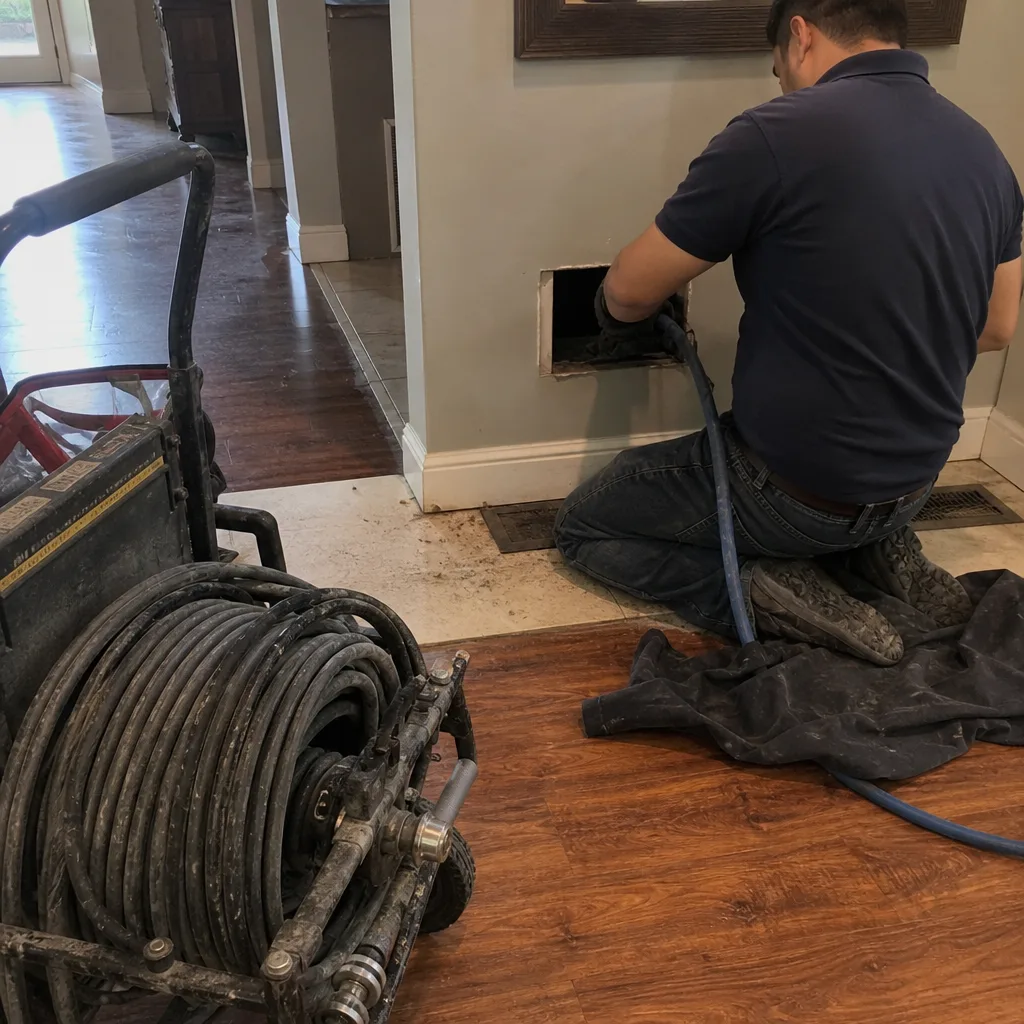 Before
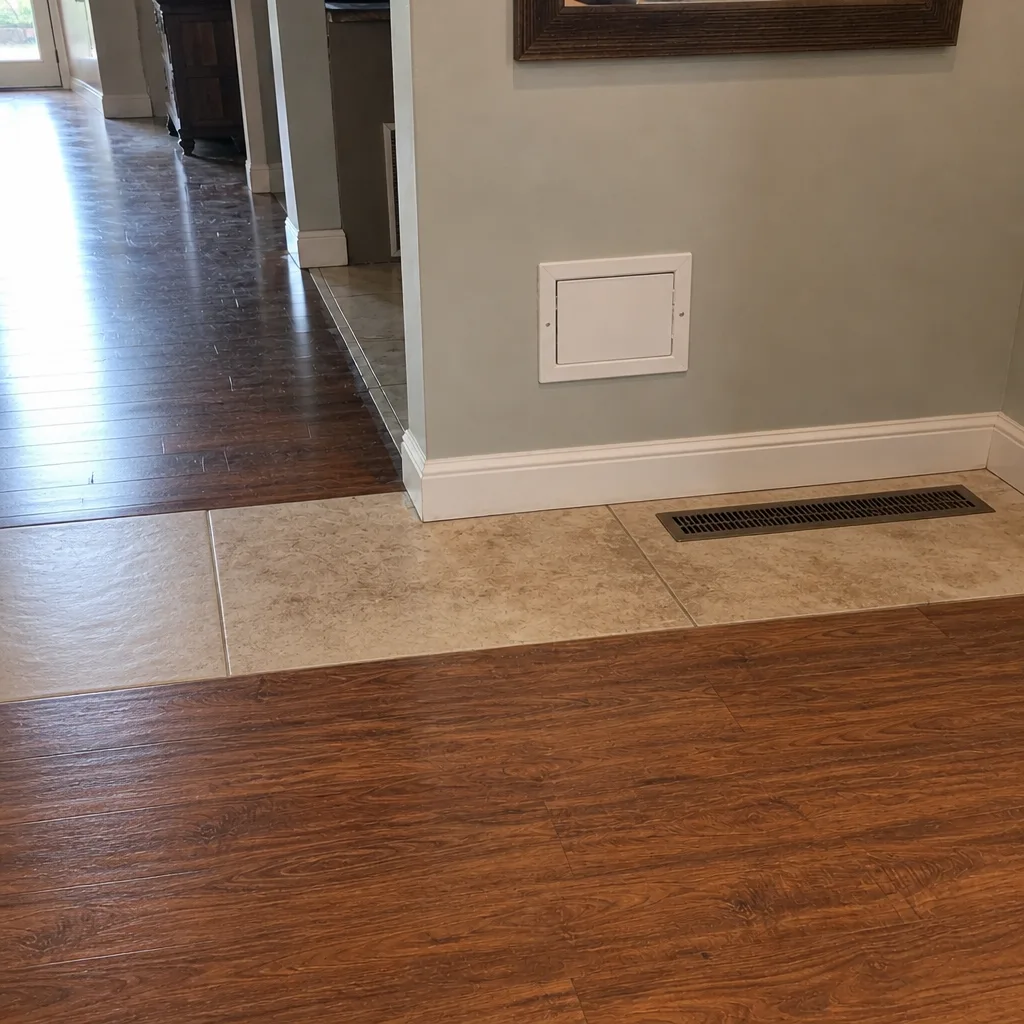 After
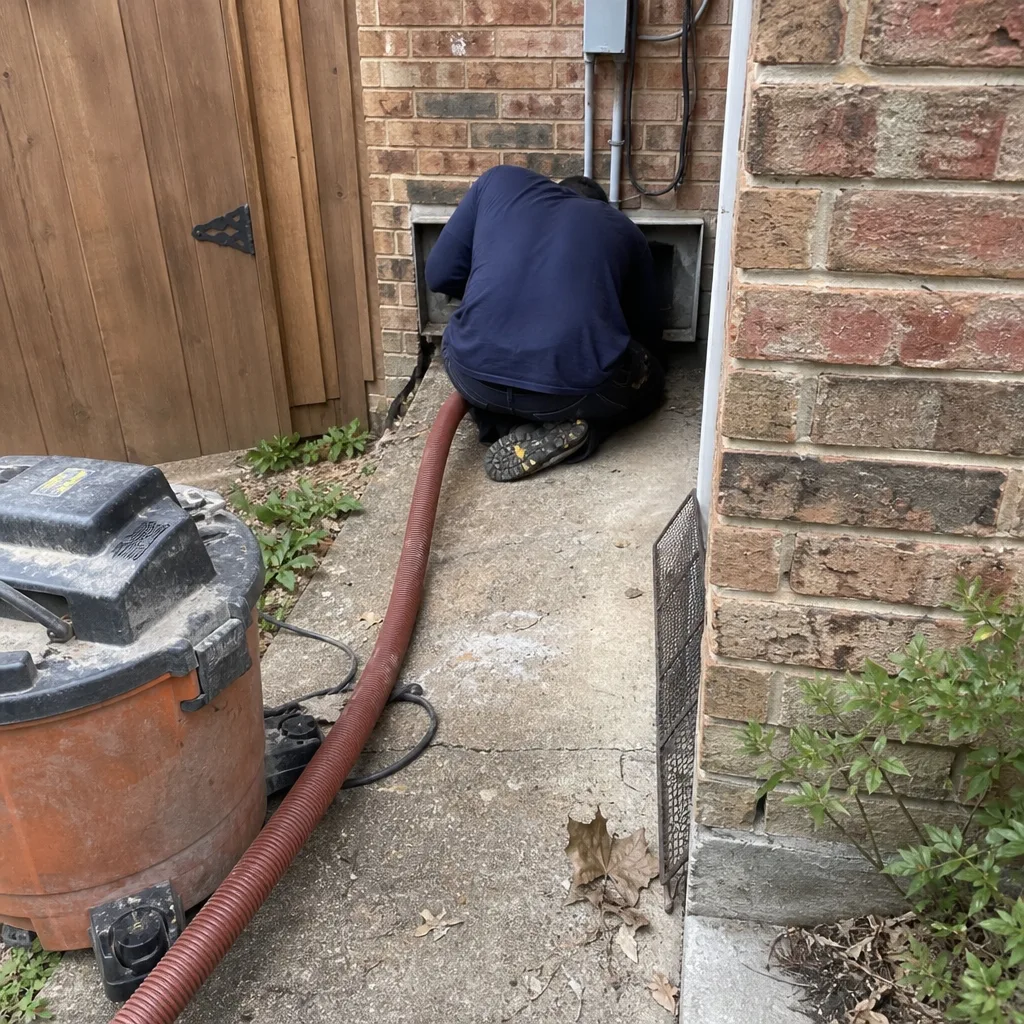 Before
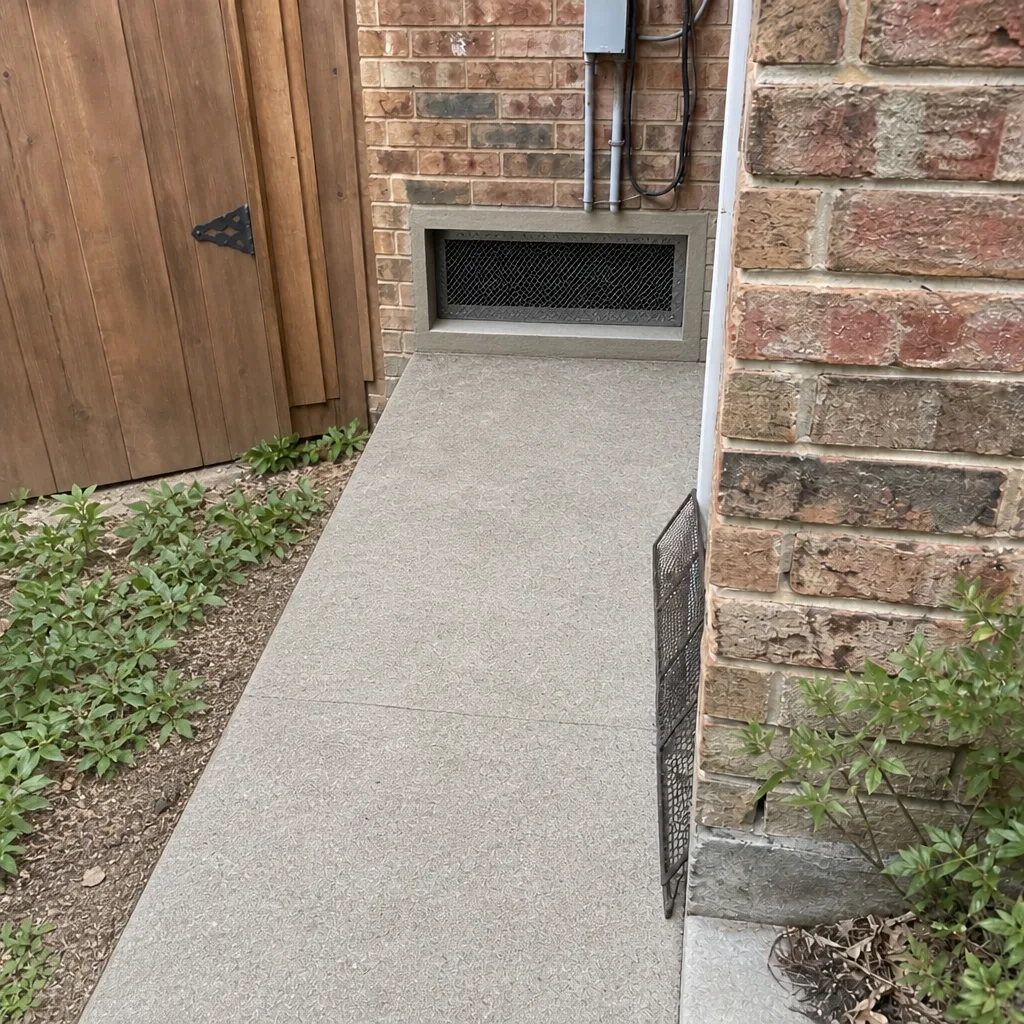 After
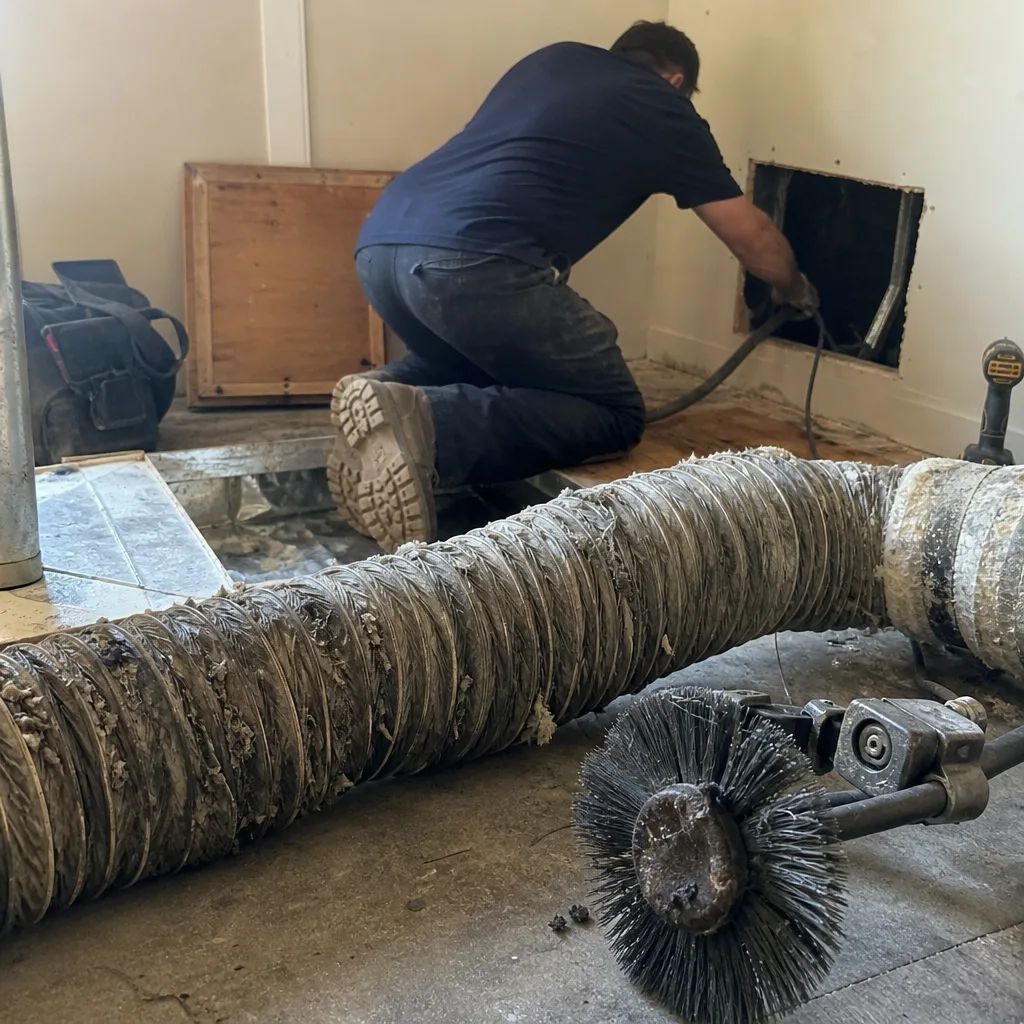 Before
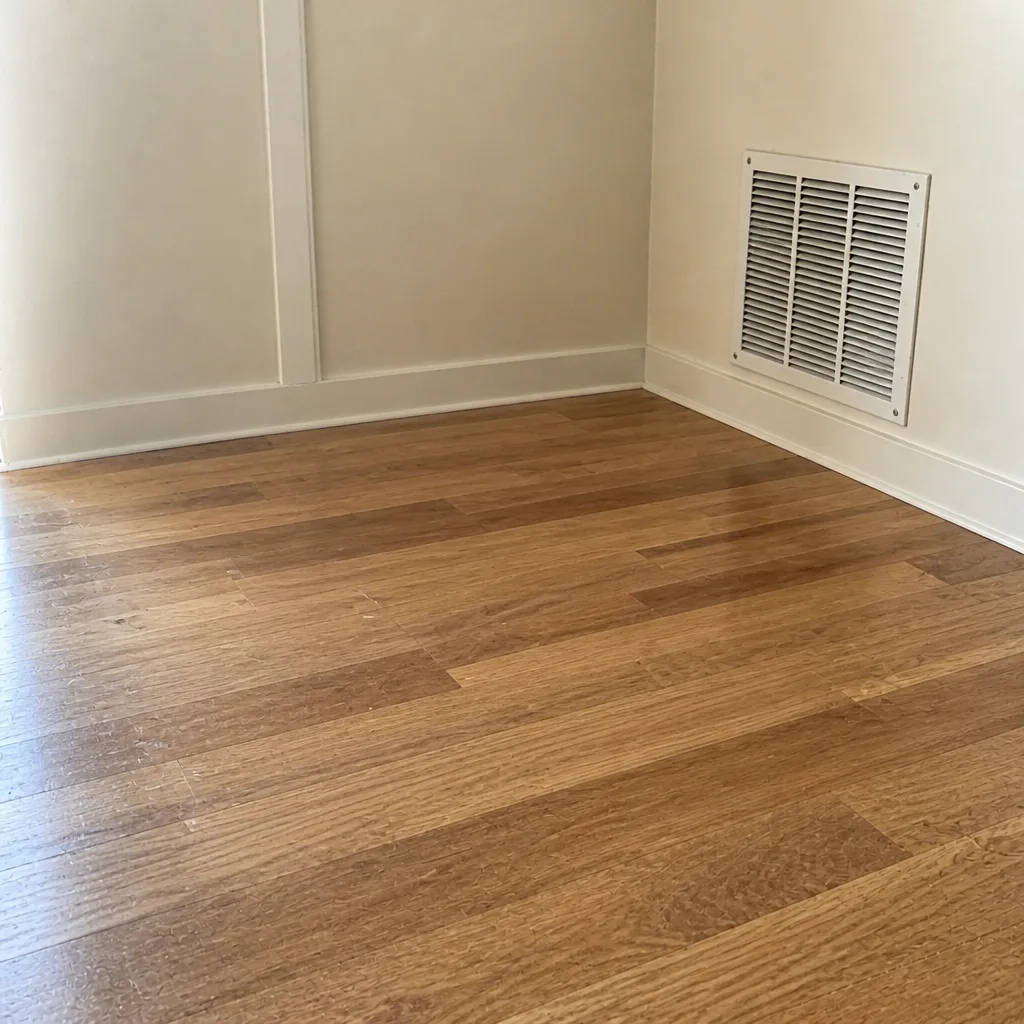 After
When to Call a Professional
Some symptoms need a call rather than a guess. Call a professional if you can see or suspect a disconnected or collapsed flex run in the attic, if a post-cleaning dust problem hasn’t resolved after a few weeks, if the system is generating musty odors that don’t clear, or if the energy bill has climbed with no other explanation. Any of these could point to a structural failure that cleaning can’t touch. On the dryer side, if it’s been more than a year since the vent was checked, that’s an immediate call – lint buildup is an industry-recognized fire hazard. For these scenarios, Paragon Air Duct Cleaning offers free estimates in Arlington – call (844) 787-8766. We answer 24/7. Fast dispatch from 7am to 7pm, Sunday through Friday. Our technicians have up to 12 years of experience, and we show up prepared to diagnose, not just to clean.
Frequently Asked Questions
Because the cleaning likely wasn’t the fix. Dust returning within weeks almost always means a return-side leak or a disconnected joint pulling unfiltered air into the system. A proper diagnosis should have checked duct integrity before the cleaning. If it didn’t, the next step is a structural inspection, not another clean. Call (844) 787-8766 for a free estimate on diagnosing the leak.
A typical whole-system air duct cleaning in Arlington runs roughly $350 to $700, depending on the number of vents, the system’s complexity, and whether structural repair is needed first. If a repair is required, the estimate covers it separately, and the price is set by the written estimate before any work starts. We don’t quote per vent and we don’t use teaser coupon pricing. Call (844) 787-8766 for a free estimate.
Because they’re describing a different job. A cheap quote usually means consumer-grade or entry-level equipment, no structural inspection, and no capability to repair what the cleaning finds. Professional-grade equipment – a Rotobrush rotary system and Nikro negative-pressure rig – costs more to operate, and it does more. A quote that doesn’t reflect that difference is almost certainly a quote for less. Call (844) 787-8766 for an estimate that covers the actual scope.
Before-and-after photos of your own system are the clearest answer. Any technician who’s confident in the work should be willing to show you what the ducts looked like before and after, and walk you through what was found and repaired. If you don’t get that, ask for it. It’s a reasonable request. For a free estimate that includes a full inspection and photo documentation, call (844) 787-8766.
For most Arlington homes, every 3 to 5 years is a reasonable baseline, but the climate pushes that interval tighter in homes with long flex runs across a hot attic. Heavy dust return, pets, and recent remodeling all shorten it. The more useful question is whether the ducts are structurally sound. A clean, sealed system stays cleaner longer. Call (844) 787-8766 for a free assessment.
In most cases, yes. A disconnected joint or a crushed flex run is a repair we can typically address on the initial visit, since our scope includes air duct repair as a core service, not an add-on. The repair is completed first, then the system is cleaned. Call (844) 787-8766 for a free estimate. We answer 24/7. Fast dispatch from 7am to 7pm, Sunday through Friday.
The Bottom Line
Most duct problems aren’t solved by cleaning alone, because most duct problems aren’t really dirt problems. They’re structural: crushed flex runs, disconnected joints, failed seals, blocked returns, and torn liners that only get worse with time and Arlington’s heat. If your last cleaning didn’t solve your dust, airflow, or energy-cost complaints, the next step isn’t another cleaning – it’s a diagnosis. Match your symptom to the cause, check the accessible joints yourself, and then call a company that can both repair and clean. The right fix done once is far cheaper than the wrong fix repeated. For a full-scope look at the service, visit our Arlington page or call (844) 787-8766 for a free estimate. We answer 24/7. Fast dispatch from 7am to 7pm, Sunday through Friday. Closed Saturday.
Written by the team at Paragon Air Duct Cleaning.