
Last updated November 15, 2026
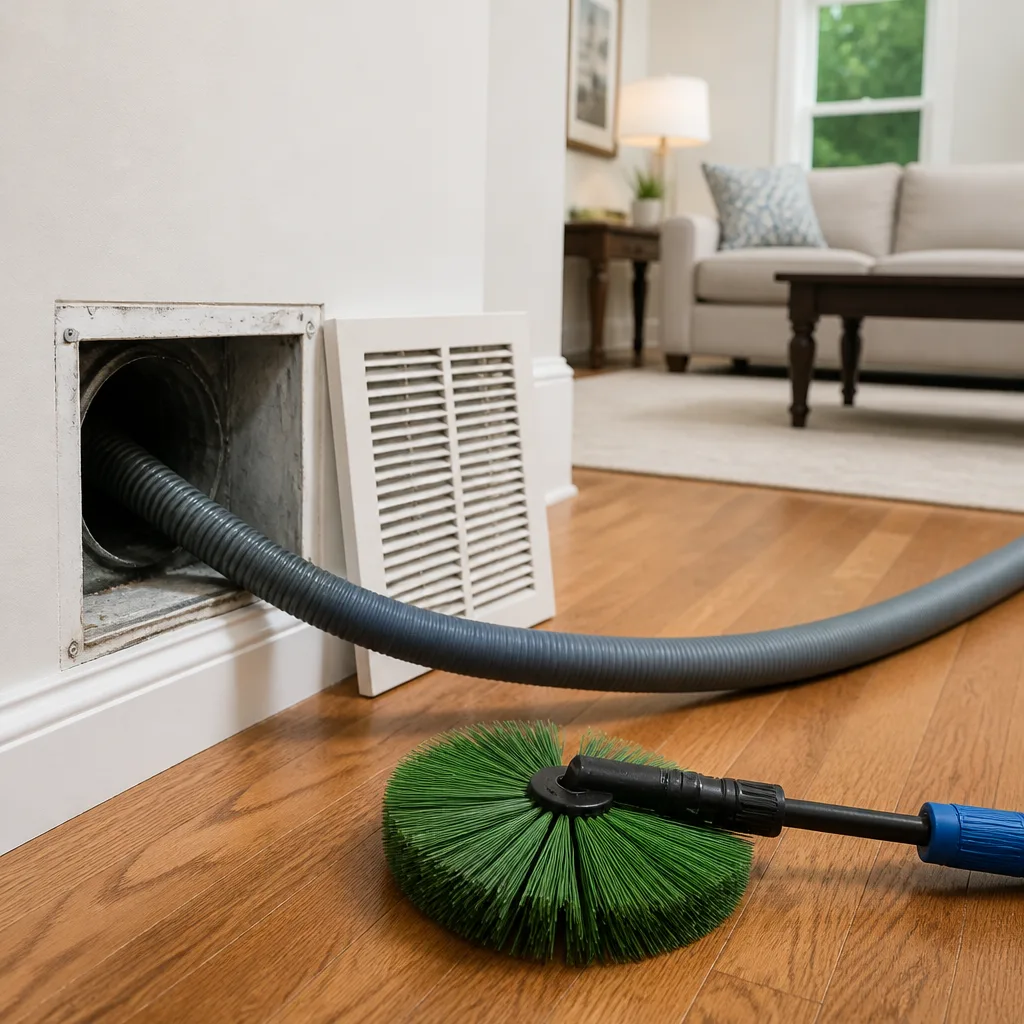 Whole-home duct cleaning
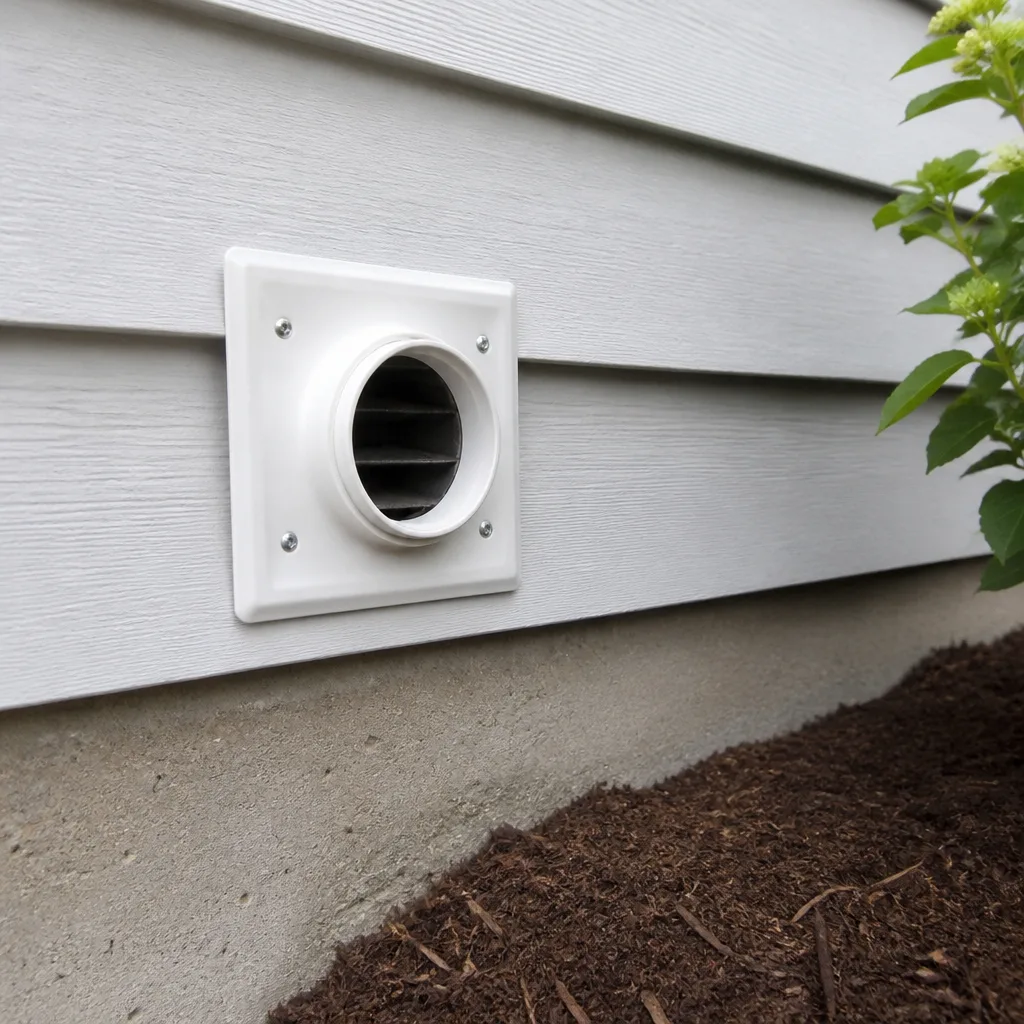 Dryer vent cleaning
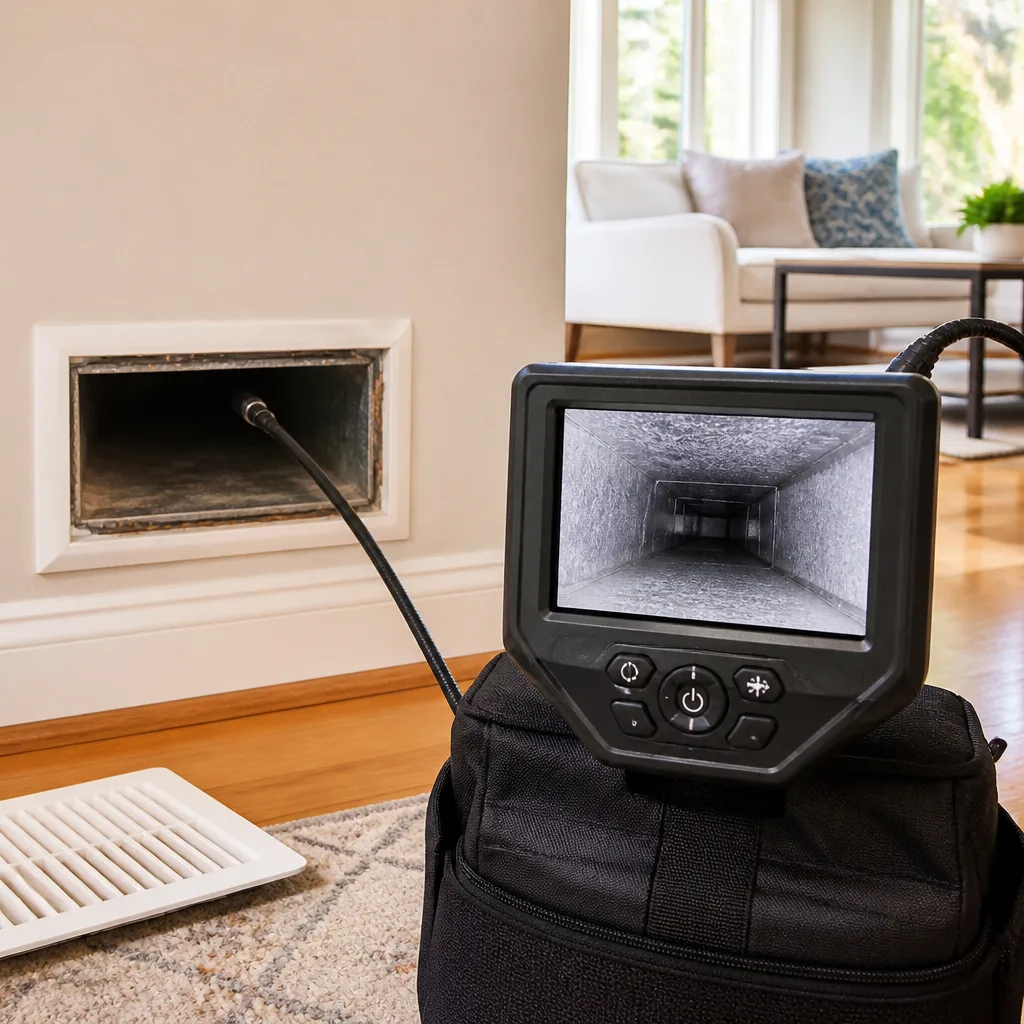 Camera inspection
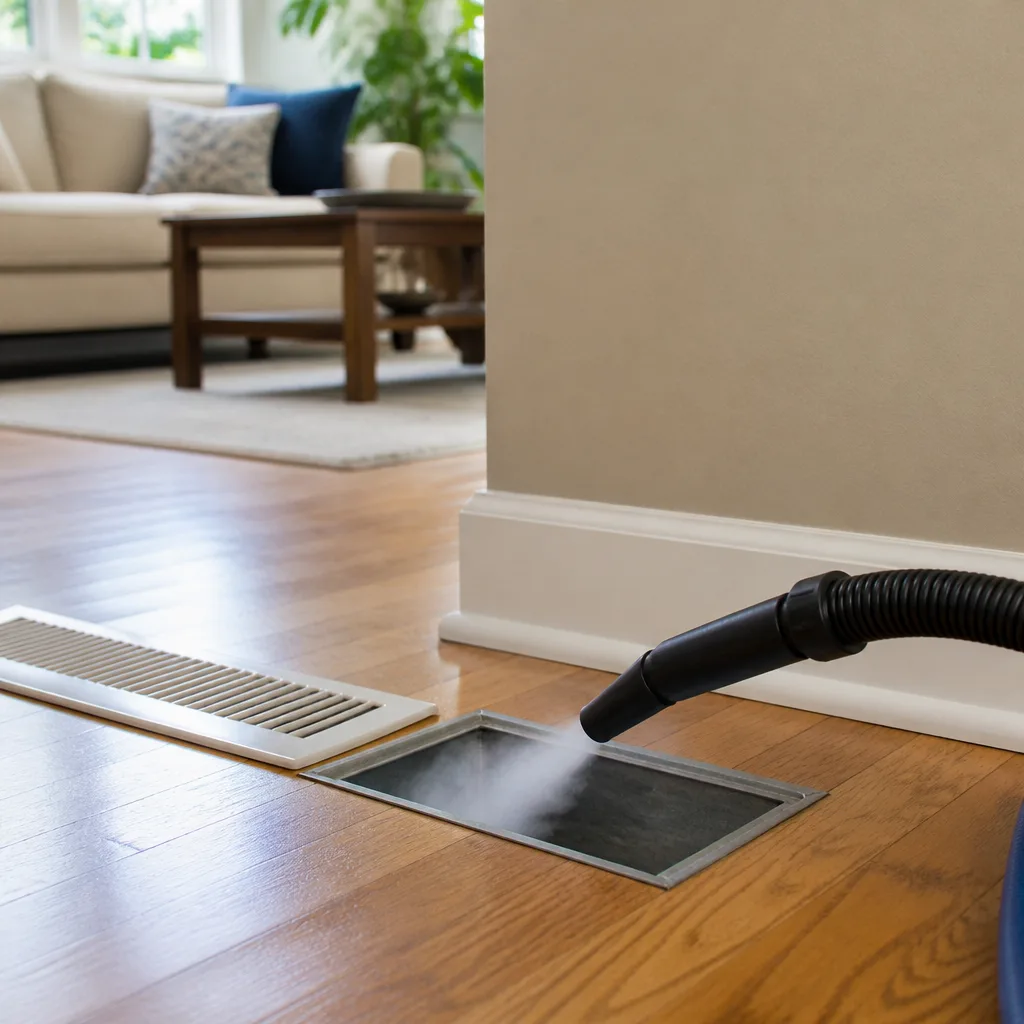 Sanitizing & deodorizing
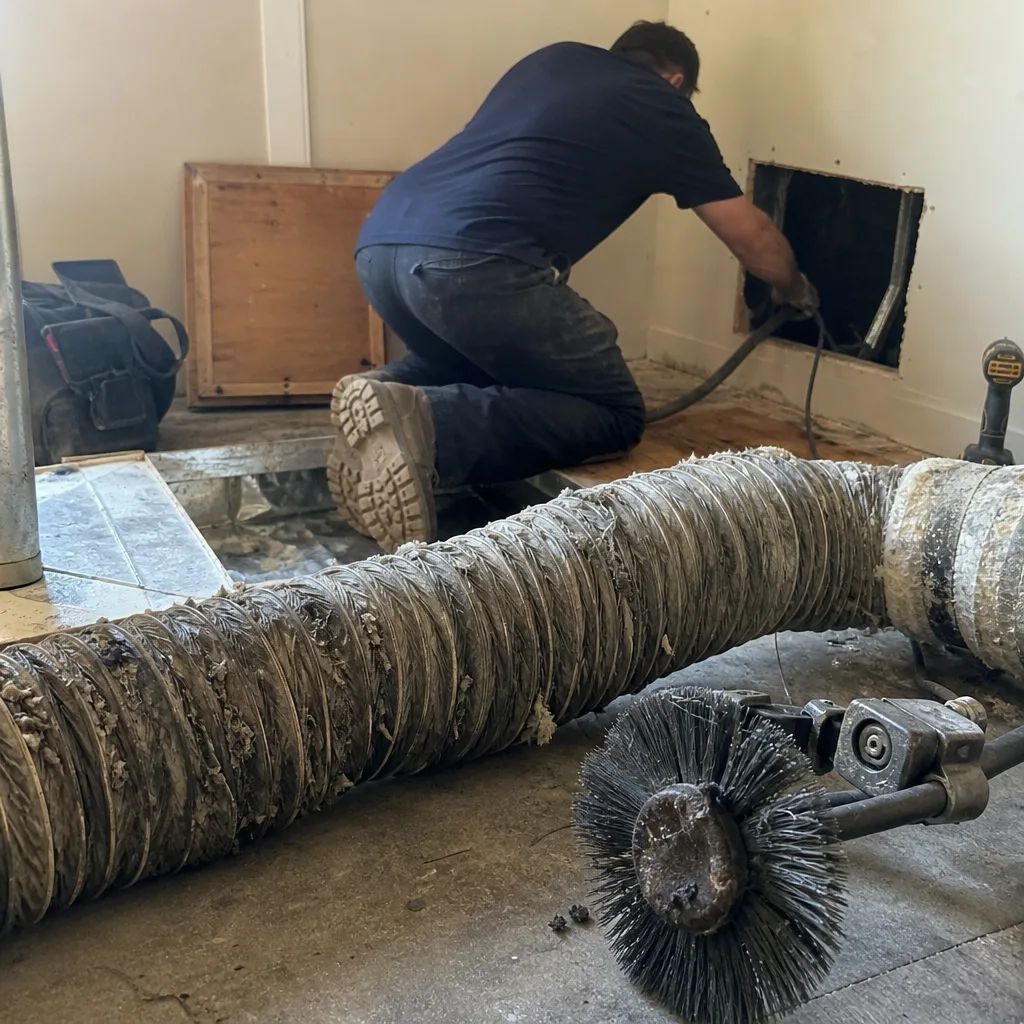
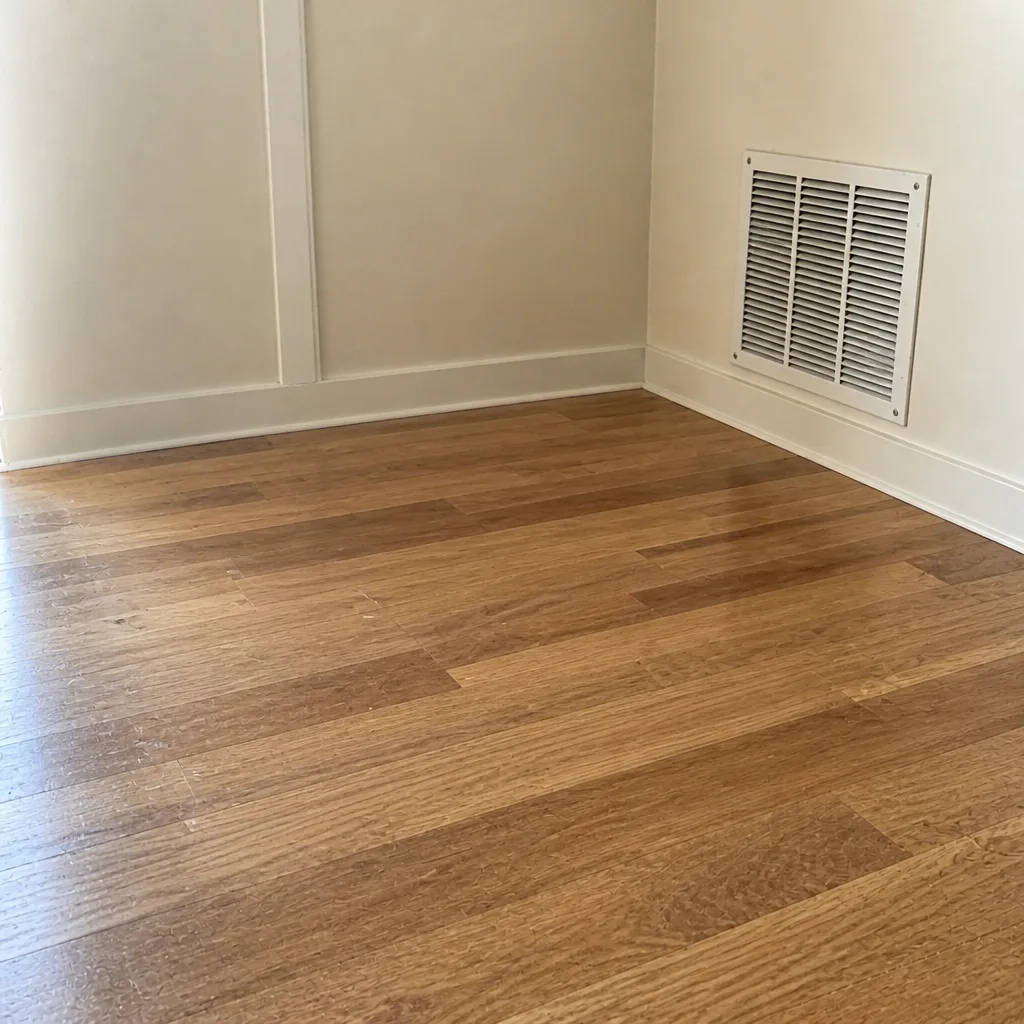
Whole-system duct and dryer vent check with before-and-after photos - you see exactly what came out of your vents
That "$99 whole-house special" is a bait ad - the real number appears once they are in your hallway, or the "clean" is a shop-vac at the register. We photograph the inside of your ducts before and after instead.
Air Duct Cleaning Permits, Codes & Inspections in Arlington, TX: What You Need to Know
No one pulls a permit to vacuum a duct. That’s the part people get right. The part they get wrong is assuming the whole job stays on the vacuum side of the line. In our experience, a routine cleaning in Arlington often turns up something structural: a crushed flex run behind a knee wall, a plenum joint that was never sealed, a return box pulling air from the attic instead of the hallway. The moment a technician replaces that run or rebuilds that box, you’ve left maintenance behind and stepped into mechanical work, and mechanical work has rules attached. This guide walks through where the City of Arlington draws that line, what the International Mechanical Code expects when it does, and the questions to ask before anyone starts so a cleaning job never quietly becomes an unpermitted repair.
Quick Answer
Air duct cleaning itself generally does not require a permit in Arlington, because cleaning is classified as maintenance rather than mechanical construction. A permit is typically triggered when the scope crosses into mechanical work: replacing duct runs beyond a minor repair, modifying or rebuilding a plenum, installing a UV air purifier or other inline air-quality device, or reconstructing a return air box. When that happens, the work falls under the International Mechanical Code as adopted by Texas and enforced locally by the City of Arlington’s Development Services department.
Styles & brands we work with
- Whole-home duct cleaning
- Dryer vent cleaning
- Camera inspection
- Sanitizing & deodorizing
Table of Contents
- Where Arlington Draws the Regulatory Line
- When a Cleaning Job Becomes Permitted Work
- What the International Mechanical Code Requires for Duct Work
- Selling Within a Few Years? Read This First
- What to Ask a Contractor When the Repair Scope Is Unknown
- How Inspections and Sign-Offs Actually Work
- How Arlington’s Climate Shapes Duct Condition
Where Arlington Draws the Regulatory Line
The City of Arlington Development Services department handles permitting for residential construction and renovation, including mechanical work on heating, ventilation and air conditioning systems. The department’s role is straightforward: if the work changes the mechanical system in a way that affects safety, performance or structural integration, it wants to see plans and inspect the result. If the work restores a system to its existing condition without altering it, it generally doesn’t.
Here’s the practical translation for duct work.
- On the maintenance side: source removal cleaning of the duct system, brushing and vacuuming of trunk lines and branch runs, sealing accessible leaks with mastic or approved tape, replacing a filter, and cleaning the blower compartment and coil exterior. None of this changes the mechanical system’s layout, capacity or code compliance, and none of it typically requires a permit.
- On the permitted side: replacing a section of duct that has collapsed or was never installed correctly, changing duct size or routing, cutting a new supply or return into a wall, ceiling or floor assembly, modifying or rebuilding a plenum, and installing powered air-quality equipment in the airstream. These change the system, and the city wants a record.
Arlington’s housing stock spans a wide range, from mid-century ranch homes near downtown to newer construction in the southern and western parts of the city. Older homes are more likely to carry duct systems that were modified by previous owners without documentation, which means a cleaning visit sometimes uncovers work that was never permitted in the first place. When that happens, the conversation shifts from “clean it” to “make it right,” and making it right usually involves the city. If you’re scheduling a visit and want to know how we handle that discovery process, our air duct cleaning page walks through the scope.
When a Cleaning Job Becomes Permitted Work
Most cleaning jobs stay cleaning jobs. The ones that escalate follow a predictable pattern, and knowing the pattern in advance keeps you out of a bad surprise. In our experience, these are the scenarios that tip a cleaning visit into permitting territory in Arlington.
- Replacing a failed duct run. Flex duct that has torn, collapsed or separated at a fitting can sometimes be reconnected and resealed. When the run itself has to be cut out and replaced, especially where the routing changes or the run is longer than a minor repair, that’s new duct installation and typically needs a mechanical permit.
- Plenum modification. The plenum is the sheet metal box where the air handler connects to the duct system. Cleaning around it is maintenance. Cutting into it to add a takeoff, resize a connection or repair a rusted section is mechanical work, and so is rebuilding it.
- UV air purifier or inline air-quality device installation. A UV system mounted in the plenum or an inline filtration unit added to the airstream changes the mechanical system and requires electrical work in most cases. That combination almost always triggers a permit, and it often needs both a mechanical and an electrical review.
- Return air box reconstruction. Return boxes that have pulled loose from framing or are drawing air from an attic or wall cavity need to be rebuilt and resealed. Rebuilding one changes the air distribution path and generally falls under mechanical permitting.
- New duct routing or added outlets. Adding a supply or return to a room that never had one is new mechanical design, full stop. It needs a permit, and in most cases it needs a load calculation to justify the change.
Here’s the part that matters most: nobody knows which of these applies until the ducts are opened up and inspected. A cleaning visit that starts as maintenance can find real damage. What separates a good contractor from a careless one is what happens at that moment, and that’s a topic we come back to further down.
What the International Mechanical Code Requires for Duct Work
Texas has adopted the International Mechanical Code as the basis for mechanical regulation, and local jurisdictions like Arlington enforce it through their permitting and inspection process. When duct replacement or modification work is permitted, the inspector’s job is to confirm that the installed work meets the IMC’s requirements for materials, clearances and sealing. Three areas come up again and again.
- Material standards. The IMC sets minimum requirements for duct materials, including that ductwork used in residential systems meets recognized standards for flame spread and smoke developed. Flex duct has to be listed and labeled for the application, and it can’t be used where the code prohibits it, such as in certain concealed spaces or where it would run through a fire-rated assembly without protection.
- Clearances. Ducts carrying heated air need specific clearance from combustible materials, and clearances apply where ducts pass near heat-producing equipment. A duct run that a previous owner squeezed into a tight chase may not meet the clearance the code requires, and a permitted repair is the moment that gets corrected.
- Sealing. The IMC requires duct systems to be sealed to limit air leakage, with the sealing method appropriate to the duct location. Ducts in unconditioned spaces like attics and crawl spaces carry stricter sealing expectations because leakage there wastes energy and can pull humid outside air into the system. This is one reason a permit-driven repair often improves performance as a side effect: the new work gets sealed properly, where the old work may not have been.
For Arlington homeowners, the practical takeaway is that permitted duct work isn’t bureaucratic friction. It’s the mechanism that ensures the new duct meets material, clearance and sealing requirements that a quick patch might skip. When we handle air duct repair, we look at the whole system against those standards rather than just closing the visible hole.
One more note on equipment: when repair work touches the air handler or the air-quality components attached to it, cross-brand familiarity matters. We work with systems built around Honeywell and Aprilaire controls routinely, and understanding how those components integrate with the duct system is part of getting the repair right the first time.
Selling Within a Few Years? Read This First
If you plan to sell your Arlington home in the next two or three years, unpermitted HVAC-adjacent work deserves your attention now, while you still have time to fix it cheaply. This is the single most common reason we see duct-related permit questions arise, and it rarely comes from the homeowner who asked. It comes from the buyer’s inspector.
Here’s how it plays out. A home inspector walks the property, notes a recently replaced section of flex duct in the attic, a new plenum connection, or a UV unit mounted in the return, and asks for documentation. If there’s no permit record with the City of Arlington, the finding goes into the inspection report. From there, one of three things happens:
- The buyer asks for a permit to be pulled retroactively before closing, which delays the sale while the work is reviewed and inspected.
- The buyer asks for a credit or price reduction to cover the cost of bringing the work into compliance, and the negotiation usually favors the buyer.
- The buyer walks away, especially in a market where they have other options.
Tarrant County buyers and their agents have gotten more careful about documentation over the past several years, and mechanical work is one of the categories that gets scrutinized. A permit record is cheap insurance. A closing that stalls over an unpermitted plenum rebuild is not. If you’ve owned the home for a while and can’t remember what was permitted and what wasn’t, now is the time to find out, not the week before you list. Even a routine dryer vent cleaning visit is a good opportunity to have the technician note any duct work that looks recently modified, since the same attic and utility spaces get inspected during the visit.
What to Ask a Contractor When the Repair Scope Is Unknown
When you book a cleaning, you don’t know what’s behind the registers. Neither does the contractor. The honest ones say so up front. The ones who quote a price and then invent a repair list once they’re inside are the reason this industry has the reputation it does. Before you book, ask these questions and listen for direct answers.
- “If you find significant damage, will you pause and talk to me before doing any repair work?” The right answer is yes, every time. Repair scope should be agreed in writing before any work starts, and if the repair needs a permit, the conversation should include who pulls it and what it covers.
- “Will you tell me whether the repair needs a permit before you start it?” A contractor who works in Arlington regularly knows the line between maintenance and mechanical work. If they can’t articulate it, that’s a warning sign.
- “Can I see photos of the damage before you fix it?” Before-and-after photos of your own ducts aren’t a marketing nicety. They’re the record you’ll want if the work ever gets questioned during a home sale.
- “What equipment are you bringing?” Source-removal cleaning with a rotary brush system and a high-powered vacuum unit is a different job than a shop vac and a hose. We run Rotobrush and Nikro equipment on every job because the tool determines whether the debris actually leaves the system or just gets stirred up.
- “Is the price per system or per vent?” Whole-system pricing agreed before work starts is the honest structure. Per-vent pricing invites the bait-and-switch that gives the trade a bad name.
- “What happens if the work needs a permit and I want to hold off?” A good contractor documents the damage, gives you the photos and the recommendation, and lets you decide when to schedule the permitted repair. The system stays as-is until you’re ready.
The through-line in all six questions is the same: you want a contractor who treats the unknown as a conversation, not an opportunity. Our approach on Arlington jobs is to scope the cleaning first, document any findings, and pause before crossing into repair territory. That’s the only way to keep the permit question honest from the start.
How Inspections and Sign-Offs Actually Work
If your duct work does require a permit, the process runs through a predictable sequence. Knowing the steps takes the mystery out of it.
- Permit application. Your contractor applies to the City of Arlington Development Services department with a scope of work describing what will be replaced or modified, the duct materials, and where the work is located. For most residential duct repairs, this is a straightforward application rather than a lengthy design review.
- Permit issuance. Once issued, the permit card or record lists the inspections required. For duct work, the typical inspection happens after installation and before the work is concealed behind drywall, insulation or attic decking.
- Rough-in inspection. The inspector confirms the duct materials, routing, clearances and sealing meet the IMC requirements and the approved scope. This is where a poorly installed run gets corrected, and where a properly installed one gets signed off.
- Final inspection and close-out. After any corrections, the permit closes out with an inspection record. That record is what a future home inspector, buyer or insurer will want to see.
A few practical notes. Permits aren’t retroactive in the sense that they erase prior unpermitted work, but a permit can generally be pulled for corrective work that brings an existing installation into compliance, and that’s usually what happens when a home sale uncovers a problem. The corrective permit and its inspection record serve the same purpose as an original permit would have. Also worth knowing: the permit is separate from the cleaning. A cleaning visit doesn’t require one, and if your contractor lumps them together or implies the cleaning itself needs a sign-off, ask why. Sometimes they’re being cautious. Sometimes they don’t understand the rules.
One thing we won’t do: tell you a specific dollar figure for permit fees. Fees are set by the city and vary with scope. The Development Services department will quote the fee when the application is filed, and that fee should appear as a line item on your contractor’s written estimate, not folded into a vague total.
How Arlington’s Climate Shapes Duct Condition
Arlington’s summers run hot and long, and the cooling system works harder here than in most of the country for more of the year. That load has a direct effect on duct condition, and understanding it helps you anticipate what a cleaning visit might find.
The big one is condensation. In a hot, humid summer, an attic in Arlington gets brutally warm, and any duct running through that space sees a large temperature difference between the cold air inside and the hot air outside. Duct insulation that has degraded, flex duct that has sagged against a hot surface, or a plenum connection that was never sealed properly will sweat. Over time, that moisture degrades insulation and can set up conditions that encourage biological growth inside the duct system. The IMC sealing requirements matter here for the same reason: well-sealed ducts don’t pull humid attic air into the airstream, and poorly sealed ones do.
The other factor is dust. Arlington sits in a part of North Texas where airborne dust and pollen loads swing with the seasons, and a system that runs through an extended cooling season pulls that air through the return and into the duct system continuously. Filters capture some of it. The rest settles. In our experience, the accumulated debris we pull from Arlington ducts after a long cooling season reflects the local conditions: fine dust, pollen and pet hair mixed with whatever construction debris came with the original build. That’s a case for cleaning on a schedule, and it’s also a case for looking hard at whether the duct system is sealed properly while the equipment is out.
Mild winters keep the heating side of the system relatively light, which means a cleaning visit in Arlington tends to focus on the cooling side and the duct system’s ability to handle summer load. If your ducts run through the attic, that’s where the inspection attention should go.
Common Mistakes to Avoid
- Assuming all duct work is maintenance. Cleaning is maintenance, but replacing a collapsed run or rebuilding a plenum is mechanical work that generally needs a permit. Ask explicitly which category the repair falls into before it starts.
- Letting a contractor repair first and permit later. Retroactive permitting is possible, but it’s more expensive and more stressful than pulling the permit before the work. If the scope is clear enough to do the work, it’s clear enough to permit it.
- Treating a permit record as optional during a home sale. In Tarrant County, unpermitted HVAC-adjacent work is a well-known inspection flag. Get the record straight well before you list.
- Booking per-vent pricing. Per-vent quotes invite upsells and inflate the total once the technician counts the registers. Ask for a whole-system price in writing before work starts.
- Skipping the photo documentation. If the work gets questioned later, before-and-after photos of your own ducts are the cleanest proof that the job was done and done right. Ask for them on every visit.
- Ignoring a sagging duct run because it’s out of sight. A duct that has pulled loose in an Arlington attic won’t announce itself, but it drives up your cooling bill and pulls dust into the system. The cleaning visit is the right time to look.
- Hiring on price alone. The cheapest quote in Arlington is often the one most likely to escalate once the technician is inside. Equipment quality and a written scope agree before work starts tell you more than a coupon.
See the difference
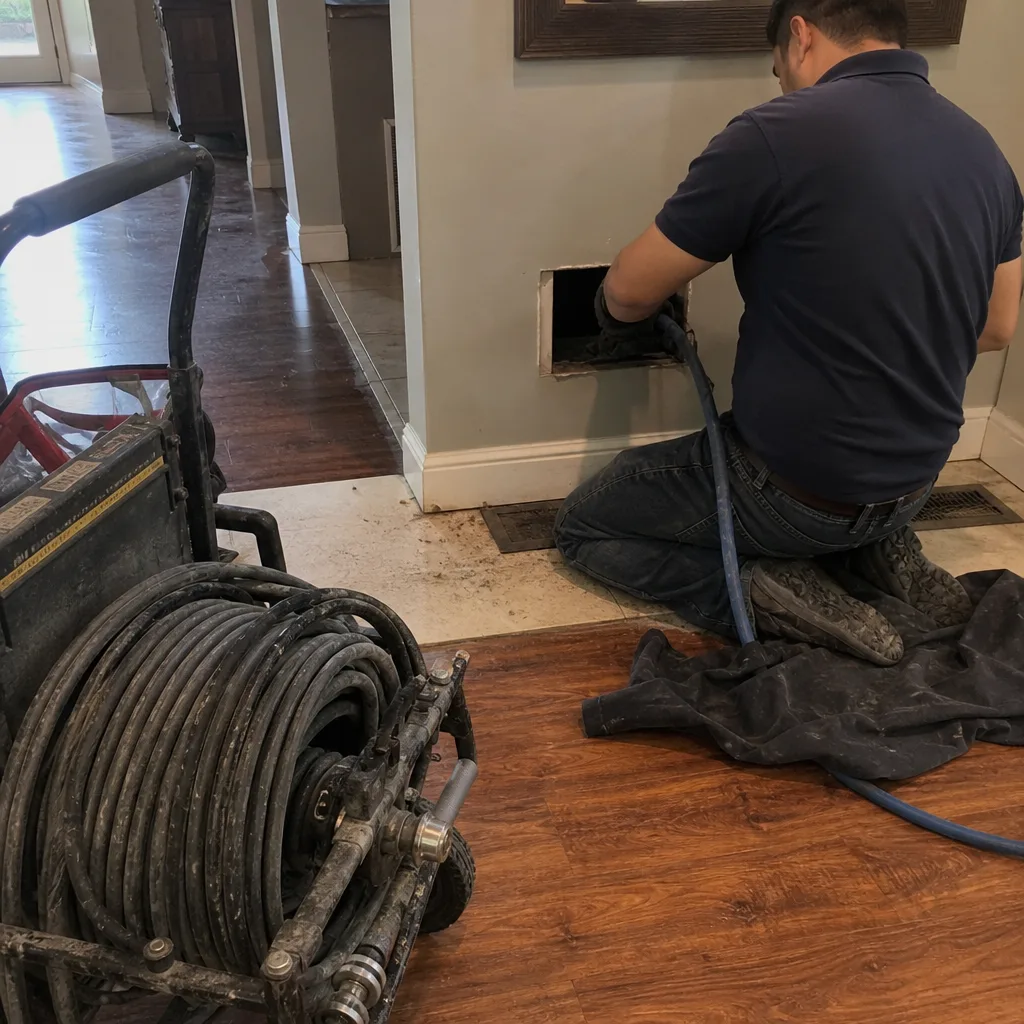 Before
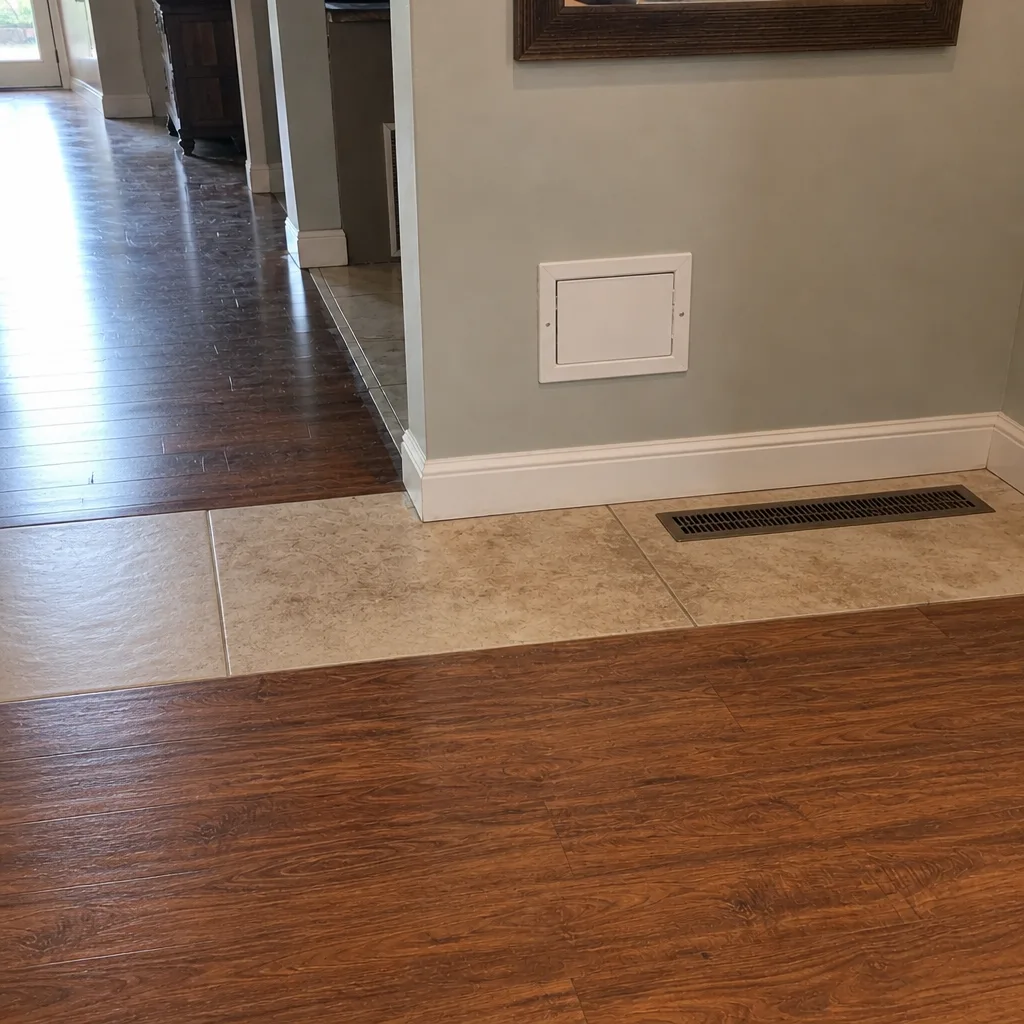 After
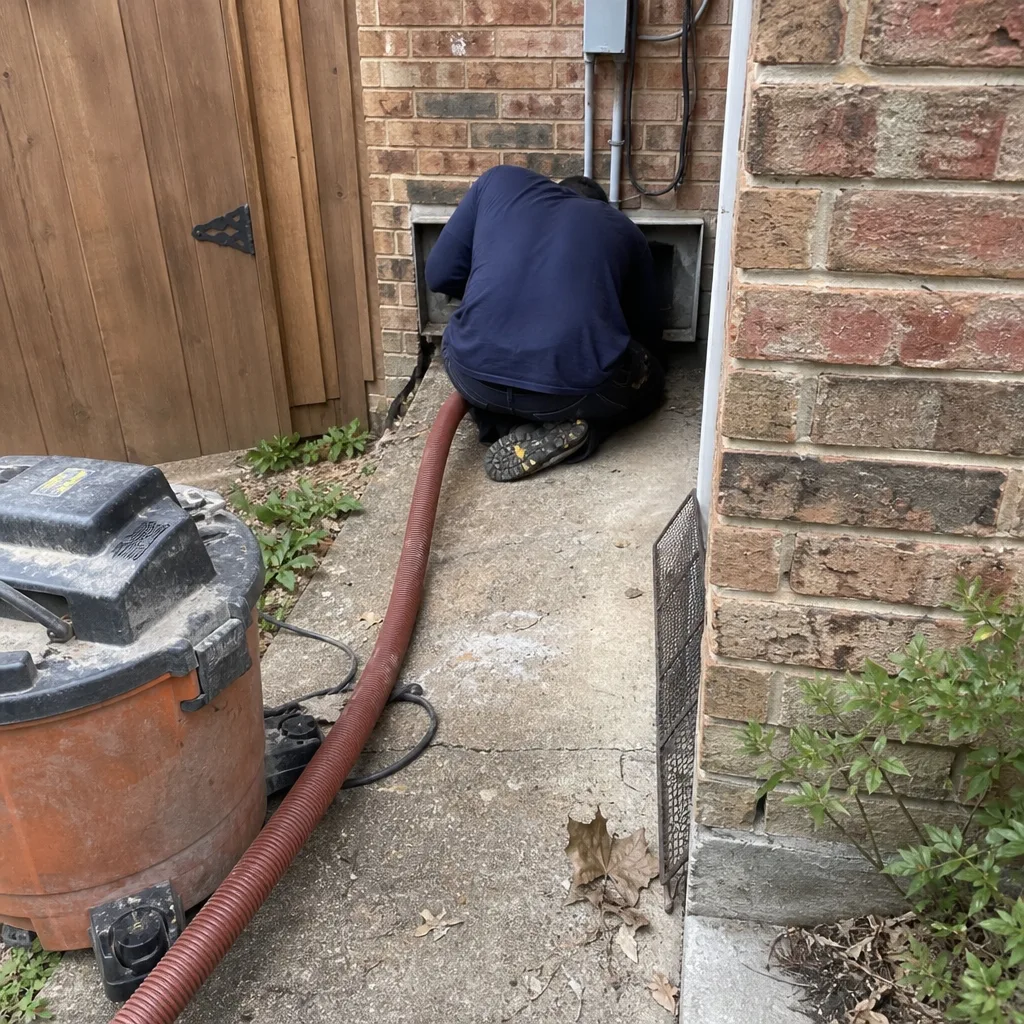 Before
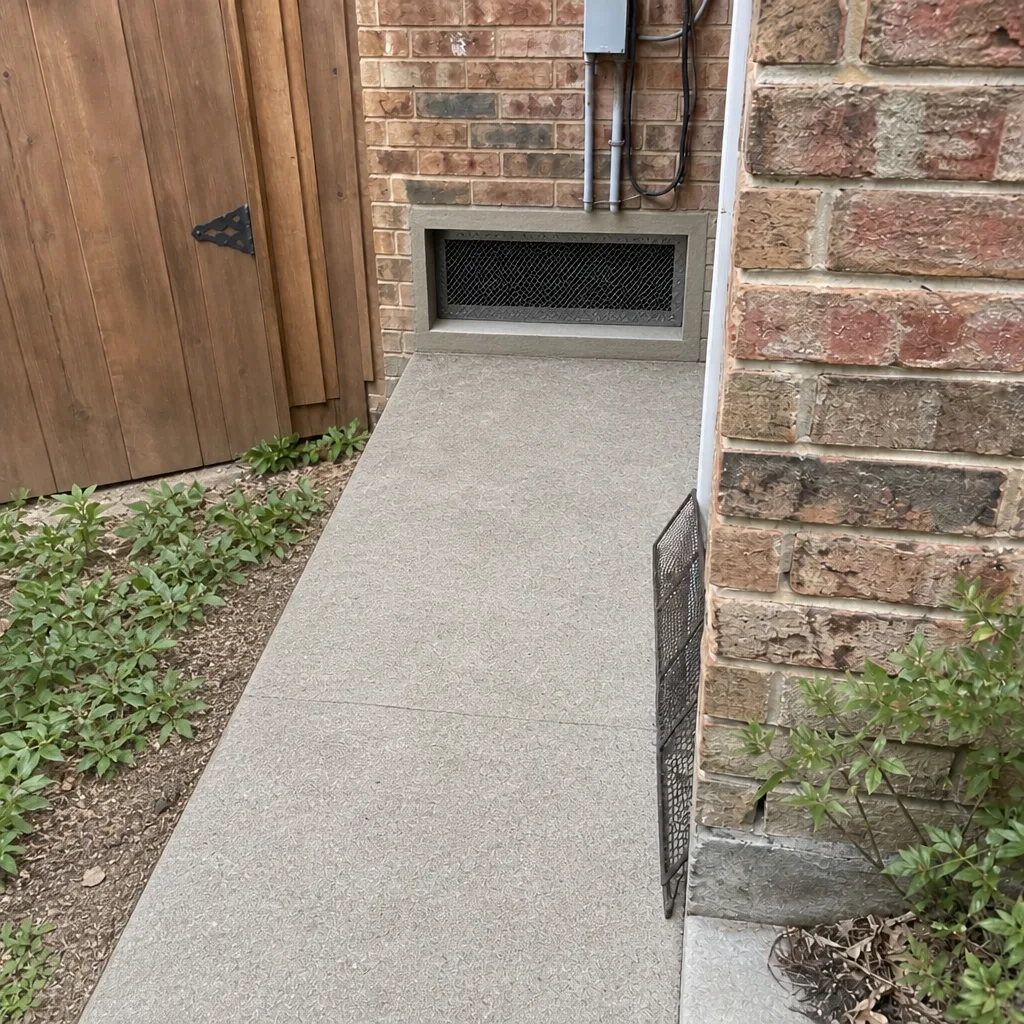 After
 Before
 After
When to Call a Professional
Call in a professional service when you notice increased dust settling on surfaces after the system runs, when a family member’s allergies seem worse indoors than out, when the airflow from a register has dropped noticeably, or when you can see or smell something wrong in the duct system. Call when you’re buying or selling a home and the inspection report flags the HVAC system, and call when a recent cleaning turned up structural damage that needs to be assessed for repair. The permit question alone is worth getting right, and it’s the kind of thing to talk through with someone who knows the local rules. Paragon Air Duct Cleaning offers free estimates in Arlington – call (844) 787-8766.
Frequently Asked Questions
Air duct cleaning generally does not require a permit in Arlington because source-removal cleaning is classified as maintenance rather than mechanical construction. A permit is typically triggered only when the work becomes a repair or modification: replacing duct runs, modifying or rebuilding a plenum, installing a UV purifier, or reconstructing a return air box. Call (844) 787-8766 for an exact quote on your system – estimates are free.
Maintenance restores the system to its existing condition without changing its layout, capacity or code compliance: cleaning, sealing accessible leaks, replacing a filter. Mechanical work changes the system: new duct runs, changed routing or sizing, plenum modification, added supply or return outlets, and installation of powered air-quality equipment. The line sits at “does the system change,” and the City of Arlington’s Development Services department enforces it through permitting. Call (844) 787-8766 if you’re unsure which side your repair falls on.
Air duct cleaning in Arlington is priced per system, not per vent, and the written estimate sets the final price after the technician assesses your layout. A whole-home system with multiple returns and a difficult attic run takes more time and equipment than a compact single-story layout, and that’s reflected in the quote. Paragon Air Duct Cleaning gives free estimates with a flat price per system agreed before work starts. Call (844) 787-8766 for yours.
Cheap quotes are usually per-vent teaser prices that grow once the technician is on site, or they reflect entry-level equipment and a limited scope. A whole-system price agreed in writing before work starts is the honest structure, and it’s what we use. We run Rotobrush rotary brushes and Nikro high-powered vacuum units on every job because the equipment decides whether the debris actually leaves the system, and we document with before-and-after photos. Call (844) 787-8766 to talk through what your system actually needs.
Ask for before-and-after photos of your own ducts, taken during the visit. Photos of your system, not stock images, are the record you want if the work is ever questioned. A whole-system cleaning with source-removal equipment should also leave a documented scope: which runs were cleaned, what was found, and what condition the system is in. Call (844) 787-8766 to book an estimate.
There’s no single answer that applies to every home. Factors that push toward more frequent cleaning in Arlington include pets, recent renovation or construction dust, long cooling seasons, a household with allergy sufferers, and a duct system that has visible debris at the registers. Many homeowners in this climate find that a cleaning every few years keeps the system ahead of accumulated dust, but the right interval depends on your system and your conditions. Call (844) 787-8766 and we’ll help you sort out a sensible schedule.
The Bottom Line
Air duct cleaning in Arlington doesn’t need a permit, but the repair work that a cleaning visit sometimes uncovers often does. The dividing line is whether the work changes the mechanical system: replacing a failed run, modifying a plenum, installing a UV device or rebuilding a return box crosses it, and the International Mechanical Code governs materials, clearances and sealing once that work is permitted. Ask your contractor whether they’ll pause and permit before proceeding if they find significant damage. Get before-and-after photos. Get a whole-system price in writing. And if you’re selling in the next few years, straighten out the permit record now rather than at the negotiating table. That’s what a serious cleaning visit should leave you with: a clean system and a clear record.
Call (844) 787-8766. We answer 24/7. Fast dispatch from 7am to 7pm, Sunday through Friday. Estimates are free, and the price is set per system by the written estimate before any work starts. Our technicians have up to 12 years of experience and use professional-grade Rotobrush and Nikro equipment on every job.
Written by the team at Paragon Air Duct Cleaning.