
Last updated November 15, 2026
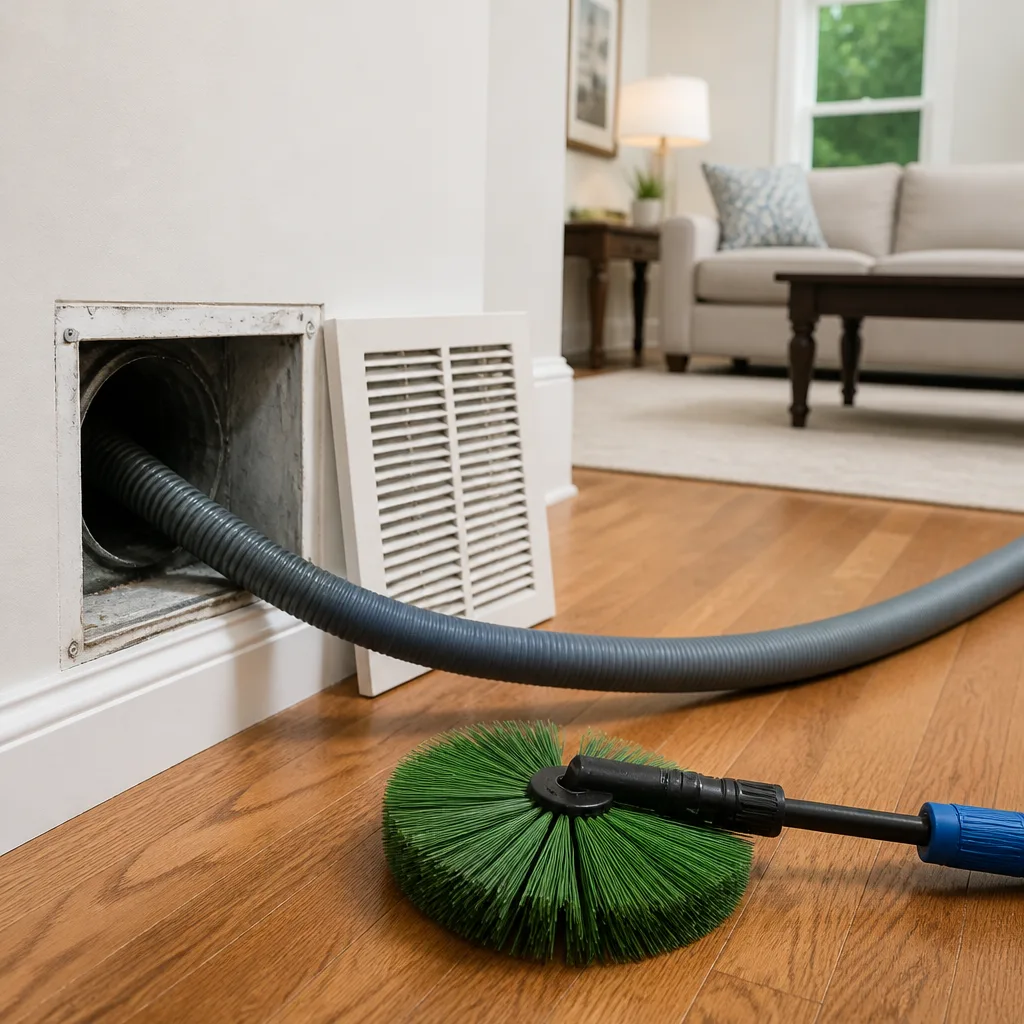 Whole-home duct cleaning
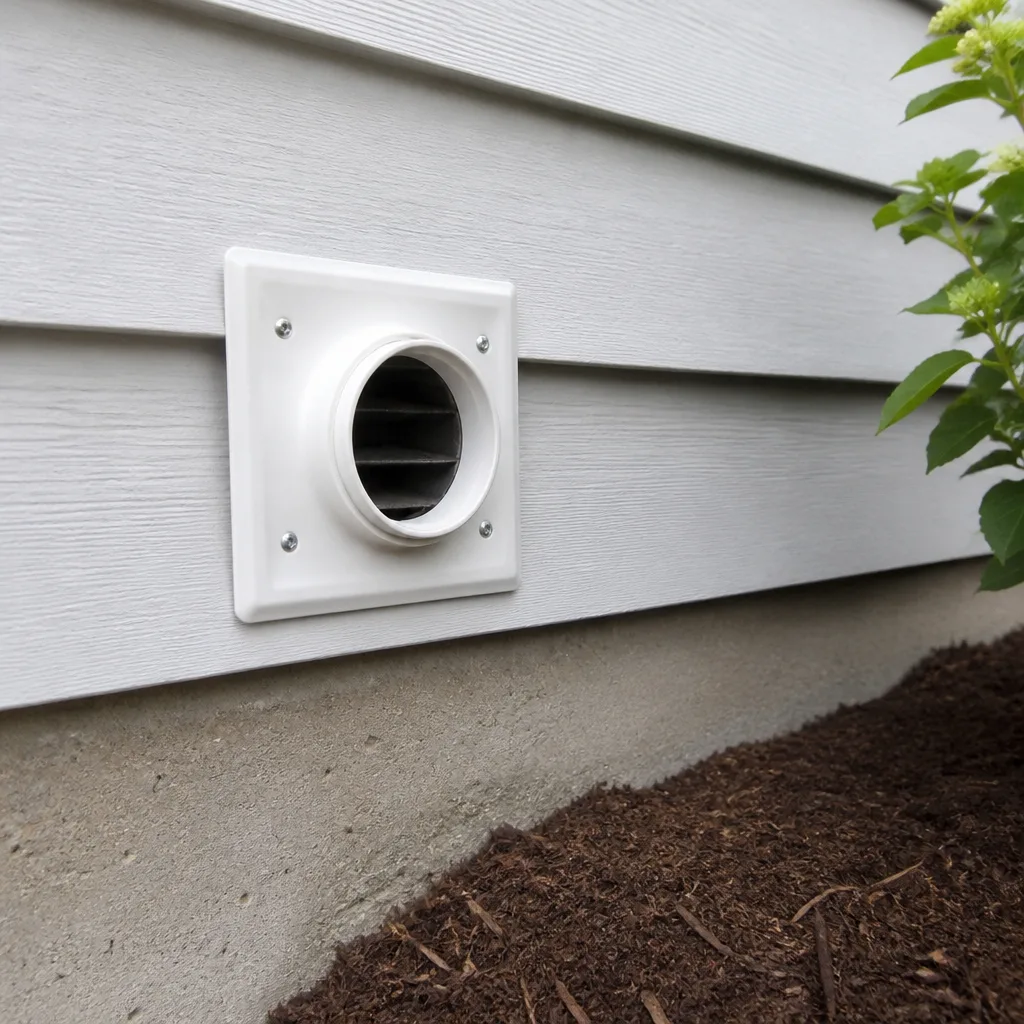 Dryer vent cleaning
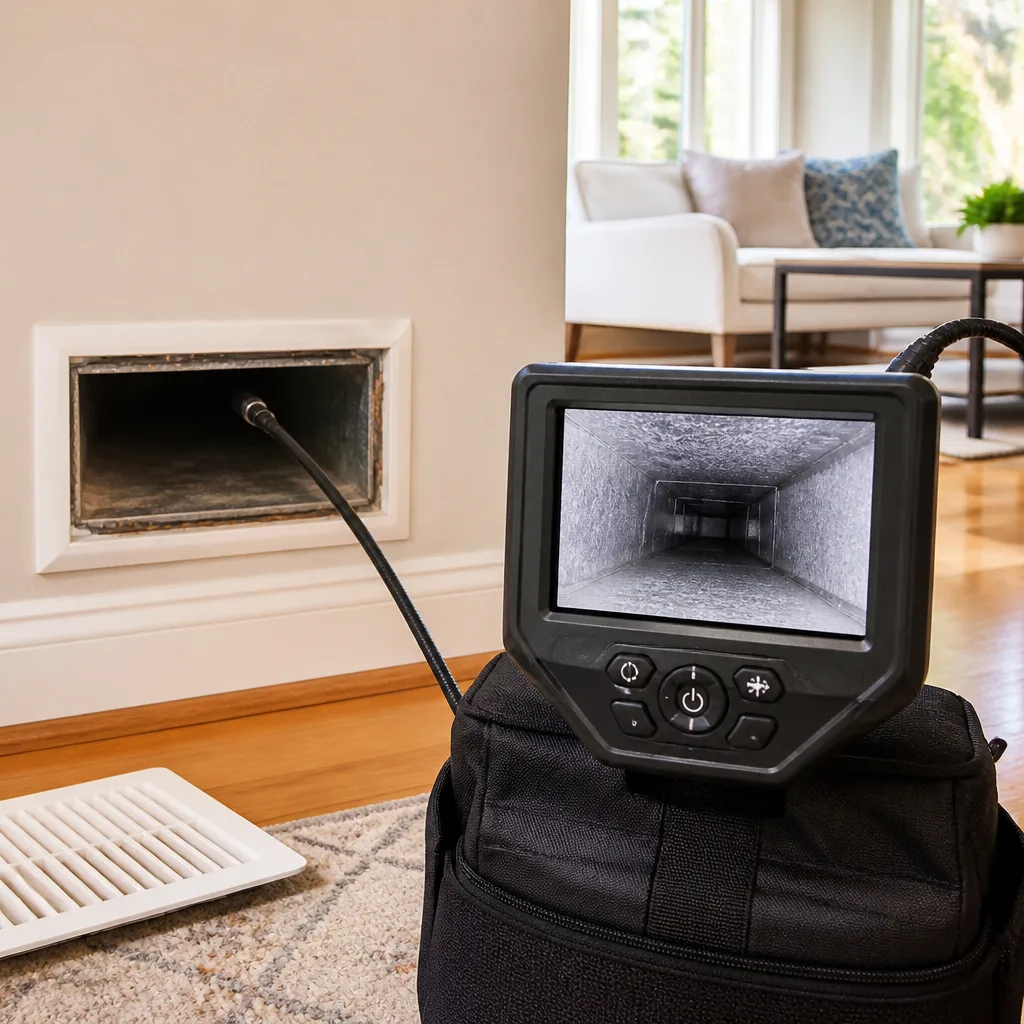 Camera inspection
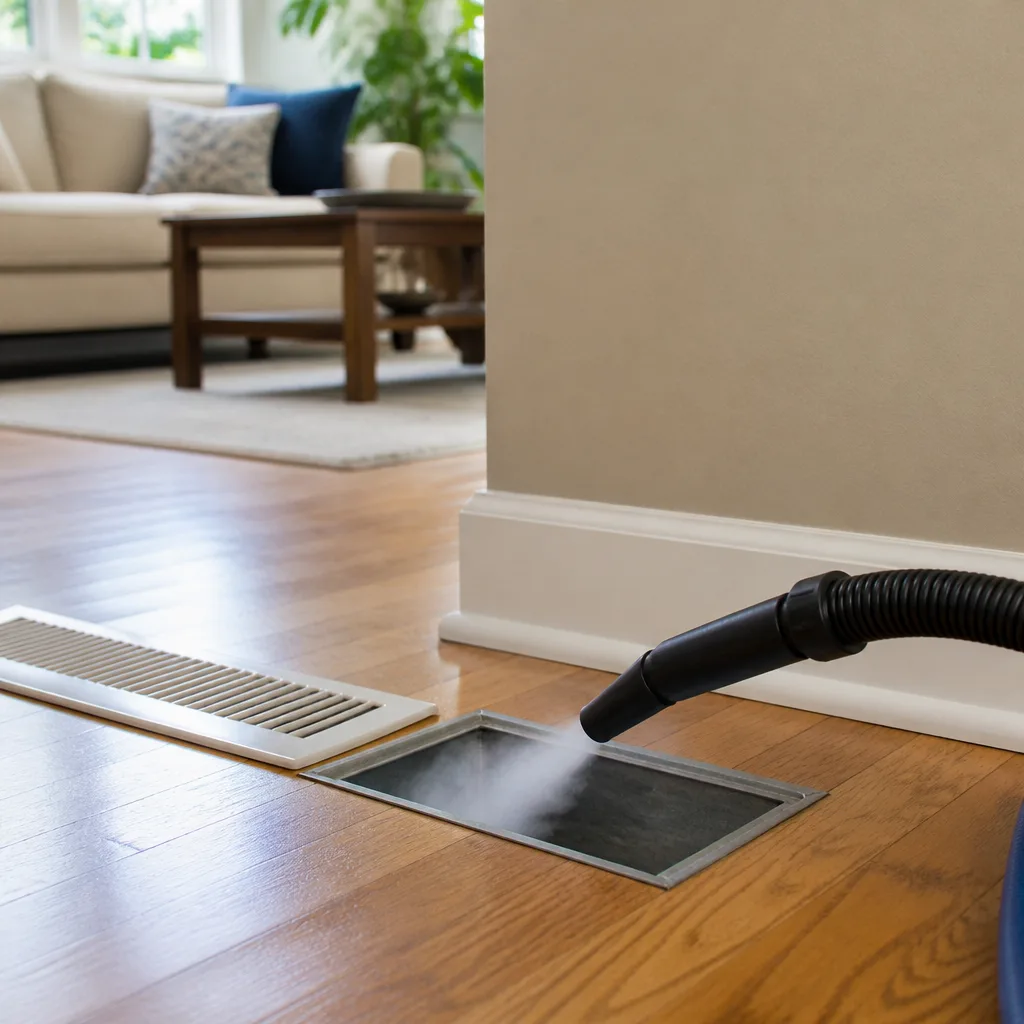 Sanitizing & deodorizing
Whole-system duct and dryer vent check with before-and-after photos - you see exactly what came out of your vents
That "$99 whole-house special" is a bait ad - the real number appears once they are in your hallway, or the "clean" is a shop-vac at the register. We photograph the inside of your ducts before and after instead.
How to Hire an Air Duct Cleaning Contractor in Arlington: A Step-by-Step Guide
Texas does not require a state license to start an air duct cleaning business. That single fact changes how you should shop for one. In an unlicensed trade, the phrase “licensed and insured” tells you almost nothing about whether the person quoting your job owns a truck-mounted vacuum or a shop vac and a leaf blower. The screening work lands on you, the homeowner, and it has to happen before anyone books the appointment.
This guide gives you that screening framework. You’ll learn the three equipment questions to ask first, what the NADCA ACR standard actually requires, which red flags are specific to low-quality operators, and how to verify the work after the technician leaves. We’re writing it for Arlington homeowners and property managers who take indoor air quality seriously, and we’ll keep the advice useful whether you hire us or someone else.
Quick Answer
To hire an air duct cleaning contractor in Arlington, ask three equipment questions before you book: the vacuum’s CFM rating, whether they use mechanical agitation or air-only tools, and where the collection point attaches to your system. Then verify NADCA membership, insist on a pre-job inspection, and demand before-and-after photos from inside the main trunk line. A legitimate contractor answers all of it without hesitation; a weak one deflects.
Styles & brands we work with
- Whole-home duct cleaning
- Dryer vent cleaning
- Camera inspection
- Sanitizing & deodorizing
Table of Contents
- Why Texas Has No Duct Cleaning License
- The Three Equipment Questions to Ask First
- NADCA Membership and ACR Standard Compliance
- Red Flags Specific to Low-Quality Operators
- How to Structure the Quote Comparison
- What Makes Arlington Duct Systems Different
- What to Verify After the Job
- The Full Contractor Interview Checklist
Why Texas Has No Duct Cleaning License
Texas doesn’t issue an air duct cleaning license. There’s no state exam, no minimum equipment requirement, and no inspection regime that separates a full-scope specialist from a generalist adding duct cleaning to a list of handyman services. Anyone with a business name and a truck can print a flyer.
That’s not a scare tactic, it’s just the regulatory reality, and it’s why the burden of vetting falls on you. In states that do regulate, the license itself acts as a floor. Here, the floor has to come from the contractor’s own disclosures and from the standards they choose to follow voluntarily.
What that means in practice for an Arlington homeowner:
- Any claim of technical expertise has to be backed by specifics: equipment brands, tool types, process steps, and the standard they work to.
- Insurance and bonding matter more than in licensed trades, because there’s no state entity tracking compliance. Ask for the certificate of insurance before work begins.
- The cheapest quote is the one that skipped the pre-inspection, used air-only tools, and never opened a camera. It looks like savings on the invoice and costs you a second job six months later.
It also means you should be skeptical of “licensed and insured” as a standalone credential. For air duct cleaning in Texas, it’s a baseline at best, not a differentiator. The real signal is how a contractor answers technical questions, and we’ll cover those next.
The Three Equipment Questions to Ask First
Before you book, ask three questions. A qualified contractor answers all three in plain numbers and terms. A marginal one changes the subject. These are the questions that separate a source-removal cleaning from a surface dusting.
1. What is your vacuum’s CFM rating?
CFM stands for cubic feet per minute, and it’s the measure of how much air the collection system moves. Professional duct cleaning rigs are engineered to maintain negative pressure inside the ductwork so dislodged debris travels to the vacuum instead of into your living room. Consumer vacuums and entry-level tools can’t hold that pressure once they hit a trunk line. Ask for the number, not the phrase “high-powered.”
2. Do you use mechanical agitation or air-only tools?
Air alone loosens only what’s already loose. Mechanical agitation, which means rotary brushes, whips, or compressed-air tools that physically contact the duct wall, is what actually removes adhered debris from the interior. The right answer is mechanical agitation plus vacuum. The wrong answer is “we blow it out with air.”
3. Where does your collection point attach to the system?
The vacuum has to connect somewhere, usually through an access port cut into the main trunk line. If a contractor tells you they’ll just hook a hose to a floor register and let it run, the system won’t be under proper negative pressure, and dust will settle back into the ducts or into your home. Ask them to describe the access port setup and confirm they’ll create one if none exists.
These questions aren’t gotchas. Any contractor using a Rotobrush rotary-brush system or a Nikro vacuum rig will answer them quickly. Anyone who can’t is telling you what their equipment actually is.
NADCA Membership and ACR Standard Compliance
The closest thing to a vetting benchmark in an unlicensed industry is NADCA, the National Air Duct Cleaners Association, and its ACR standard. NADCA is a trade association, not a regulator, but its ACR standard sets out what a proper cleaning job actually involves: source removal rather than surface cleaning, negative pressure throughout, mechanical agitation of the duct surfaces, and verification that the system is visibly clean at the end.
Membership signals that a contractor has chosen to work to a published standard. It doesn’t guarantee quality, but it’s a meaningful filter and you can verify it directly on NADCA’s own directory. Ask for the membership number and check it yourself.
What the ACR standard actually requires, in rough terms:
- Source removal as the objective, meaning contamination is physically extracted, not encapsulated in place.
- Negative pressure maintained throughout the job, not just at the start.
- Mechanical contact with the duct surfaces, using brushes, whips, or compressed-air tools.
- A documented before-and-after assessment, usually with photographic or video evidence.
- Protection of the HVAC components and the home during the work.
What it does not require, despite what some contractors claim: a specific truck brand, a particular number of technicians, or any certification the contractor invents. If a contractor says “we’re NADCA certified” without being able to name the standard or produce a membership record, that’s a claim worth questioning. “NADCA member working to the ACR standard” is the honest phrasing.
Red Flags Specific to Low-Quality Operators
Most “how to hire” advice gives you generic warnings about unmarked vans and door-to-door sales. Useful, but not specific enough. The real red flags in duct cleaning are all about process, because process is where the shortcuts live. Here’s what to listen for.
- No pre-job inspection. A qualified contractor inspects the system before quoting, checking the visible ductwork, the return side, and often running a camera into the trunk. Skipping this means the quote is a guess, and the guess is usually low.
- Pricing per vent instead of system scope. “Ten dollars a vent” rewards the contractor for doing as little as possible per opening and tells you nothing about how much work the main trunk needs. A system-scope quote prices the full job, not a headcount of registers.
- No access port creation. If the system has no service access and the contractor has no plan to create one, they cannot be cleaning the trunk line properly. They may not be cleaning it at all.
- Refusal to show equipment before work begins. Ask to see the vacuum and the agitation tools on arrival. A qualified contractor is happy to walk you through them. A weak one finds a reason not to.
- Aggressive upsells after the truck is parked. Mold treatment, sanitizing, and “coil cleaning” are legitimate services in some cases, but they should be discussable in the quote conversation, not dropped on you once the equipment is unloaded.
- No cameras. If the contractor can’t show you the inside of your ducts before and after, you have no way of knowing whether the work happened.
- Vague answers to the three equipment questions. This is the clearest tell. If they don’t know their CFM or can’t describe their agitation tools, they’ve probably never been asked, which tells you what kind of operation they run.
Retail-style coupons and teaser pricing belong on this list too. A coupon quote that becomes a much larger invoice once the technician is on site is the industry’s most common bait-and-switch. Whole-system pricing agreed in writing before work starts is the way out of that trap.
How to Structure the Quote Comparison
Comparing duct cleaning quotes is hard because contractors price differently. One quotes per vent, another per hour, another by system size. Line them up on four dimensions and the picture gets clear.
- Total scope. How many trunk lines, how many branches, what’s the expected length of ductwork, and is the return side included. Ask each contractor to describe the job in their own words and compare the descriptions.
- Equipment used. CFM, vacuum brand, agitation tool type, and whether a camera is used. The equipment list should look similar across qualified contractors and missing from weak ones.
- What’s excluded. Dryer vent cleaning, coil cleaning, mold treatment, and repair work are all usually separate line items. Ask for each one to be priced or explicitly excluded, so an upsell later isn’t a surprise.
- What’s included in writing. A written estimate that names the total, the equipment, the scope, and what happens if repairs are discovered mid-job. If a contractor won’t put that in writing, you’re not comparing quotes, you’re comparing promises.
The pattern to watch for: a suspiciously low total that turns out to be “cleaning only, most of the system, unless we find problems.” A quote that seems high may turn out to be the one that already includes the repairs the job will actually need. When you compare, compare the fully-scoped number.
We price every job this way for our own air duct cleaning in Arlington: one flat price per system, agreed before work starts, with before-and-after photos of your ducts included. It’s a better process than coupon pricing, and it makes the comparing easy for you.
What Makes Arlington Duct Systems Different
Arlington homes and businesses sit in a mixed climate that isn’t as extreme as some Texas cities but is dry and dusty for much of the year. That has practical consequences for duct cleaning that a generic contractor won’t mention.
Newer construction in neighborhoods like Viridian, Lake Arlington, and the fast-growing southeast corridor often runs on flexible ductwork in the attic, sometimes with long, curving runs that are hard to clean without the right agitation tools. Older homes near central Arlington, Interlochen, and the Highland Park area tend to have rigid sheet-metal ductwork that’s easier to access but more prone to seam separation and joint gaps. Both need a contractor who inspects what’s actually in the house, not one who quotes from a template.
The dry stretch from late spring through early fall also loads up return-side filters and ducts faster in Arlington than in more humid parts of the state. A homeowner who spends June through September running the system hard may find visible dust accumulation at the return registers sooner than a homeowner in a wetter climate. That doesn’t mean annual cleaning is required; it means the inspection matters more than the calendar.
If you’re also responsible for a dryer, the risk is different. Lint accumulation in a dryer vent is a recognized fire risk, and it doesn’t get cleaned by a standard duct cleaning job. Treat dryer vent cleaning as a standalone, safety-critical service and ask about it explicitly when you’re comparing quotes.
What to Verify After the Job
You can’t see inside your ducts. The contractor can. That’s the whole point of before-and-after documentation, and the verification step is where a lot of jobs quietly fall short. Here’s what to ask for once the work is done.
- Before-and-after photos from the main trunk line. Not a photo of a floor register. Not a photo of the vacuum. The trunk line is where contamination accumulates and where the cleaning either happened or didn’t.
- Video inspection if available. A camera run through the trunk before and after gives you a continuous record. Many qualified contractors run this as standard.
- Photos of any repairs made. If a joint gap or a collapsed section was found and addressed, you should see the before and after of that repair, not just a verbal note.
- A written summary of the job. What was cleaned, what was found, what was recommended but not done. This is your record if any issue comes up later.
- Clean floors and covered furniture. A proper job protects the home during work. If the cleanup was sloppy, the process probably was too.
If a contractor can’t provide trunk-line photos, ask why. There’s no good answer. Everyone in this trade who’s serious about the work carries a camera and uses it.
The Full Contractor Interview Checklist
Here’s the full sequence. Work through it in order and you’ll have a clear read on any Arlington contractor before you commit.
- Ask the three equipment questions. CFM, agitation tools, access port placement.
- Ask for the pre-inspection. They should offer one before quoting, not after.
- Verify NADCA membership directly. Check the directory, not just the business card.
- Ask what the ACR standard means to them. Someone who works to it can explain it in two sentences.
- Request the written estimate. Total price, scope, equipment, exclusions, and what happens if repairs are found.
- Ask about before-and-after photos. Confirm in advance that trunk-line photos will be part of the deliverable.
- Confirm insurance. Certificate of insurance, not just the phrase “fully insured.”
- Ask about the repair capability. If gaps or tears are found, can they fix them, or do they hand you off to someone else?
- Check the dryer vent question. Whether it’s included, priced separately, or not offered at all.
Run every quote through these nine steps and you’ll see which contractors are equipped to do the work and which are equipped to sell it. Most homeowners can complete the whole checklist in twenty minutes per contractor.
Common Mistakes to Avoid
- Booking on the star rating alone. Online reviews tell you how the interaction felt, not what tools were used. Ask the equipment questions before you trust the review count.
- Comparing quotes on price without comparing scope. A $150 quote and a $600 quote can look like the same service. Usually they’re not: one is a surface dusting, the other is source removal with cameras and an access port.
- Assuming “licensed and insured” is a real filter in Arlington. Texas has no duct cleaning license, so that phrase covers less ground here than homeowners expect. It’s a starting point, not a certification.
- Skipping the pre-job inspection. Booking before the contractor has looked at the system means you’re accepting a guess on scope. In Arlington, where both flex and sheet-metal systems are common, the inspection is often what determines the quote.
- Letting a coupon decide the job. A teaser price that grows once work begins is the industry’s signature move. Whole-system pricing in writing before work starts is the only defense.
- Accepting a register photo as proof of work. Ask for trunk-line before-and-after photos and video if it’s available. A register photo shows a cleaned surface, not a cleaned system.
- Treating dryer vent cleaning as a throw-in. It’s a separate job with its own fire-risk profile. Ask for it as a distinct service with its own scope, not a “we’ll take care of it.”
See the difference
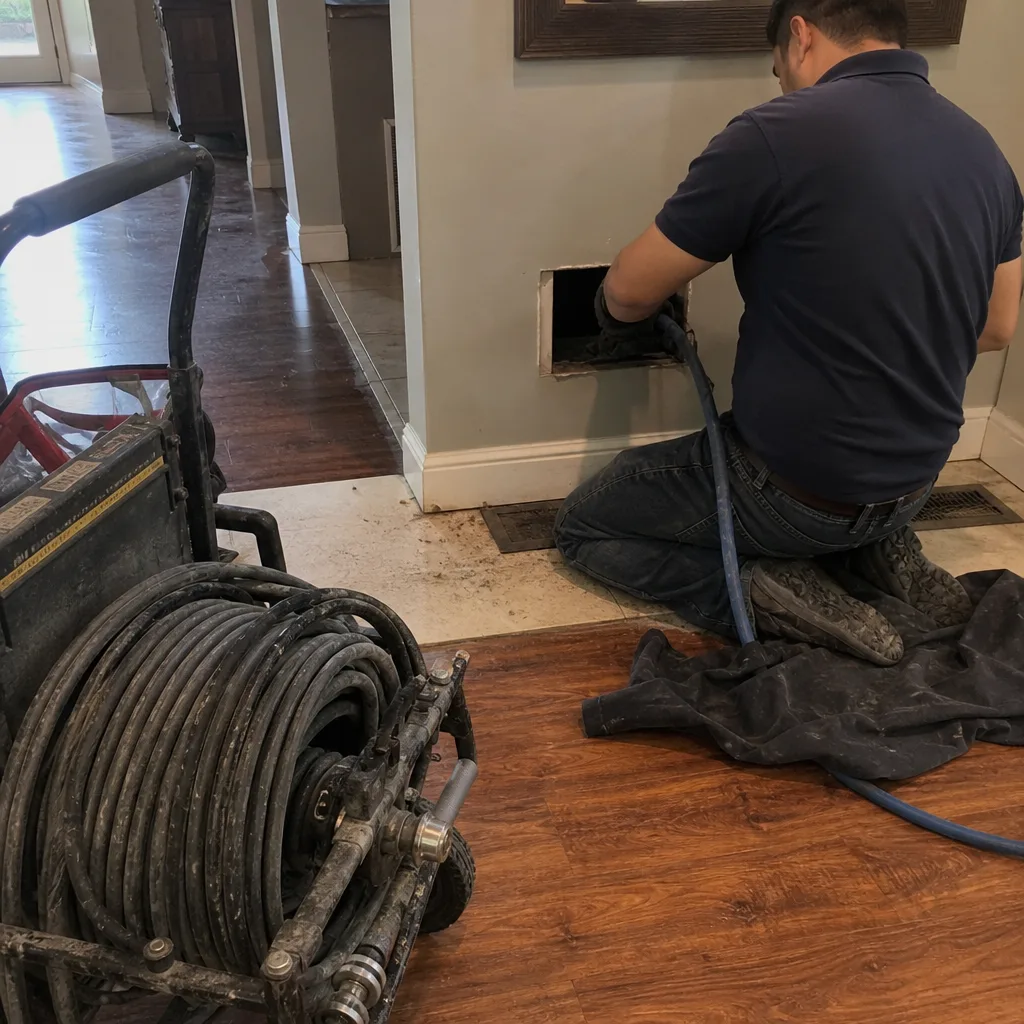 Before
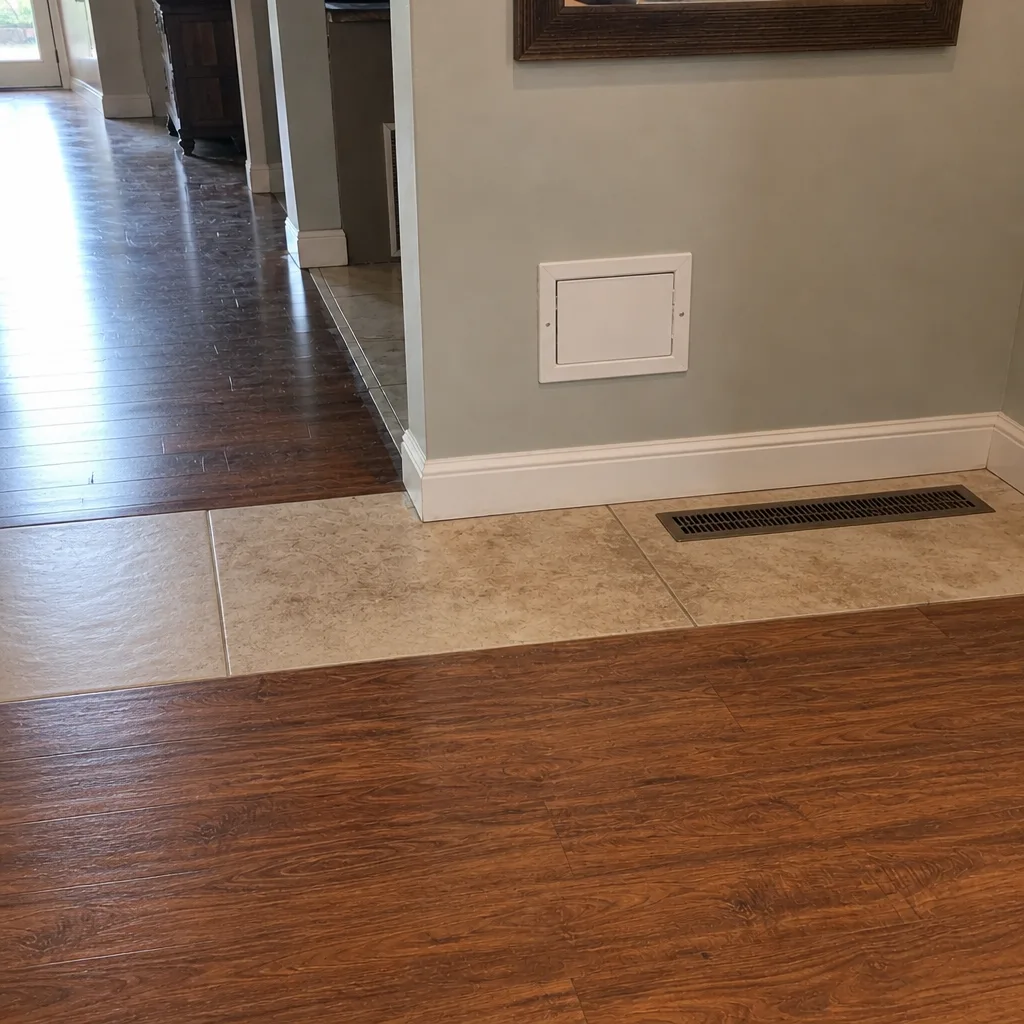 After
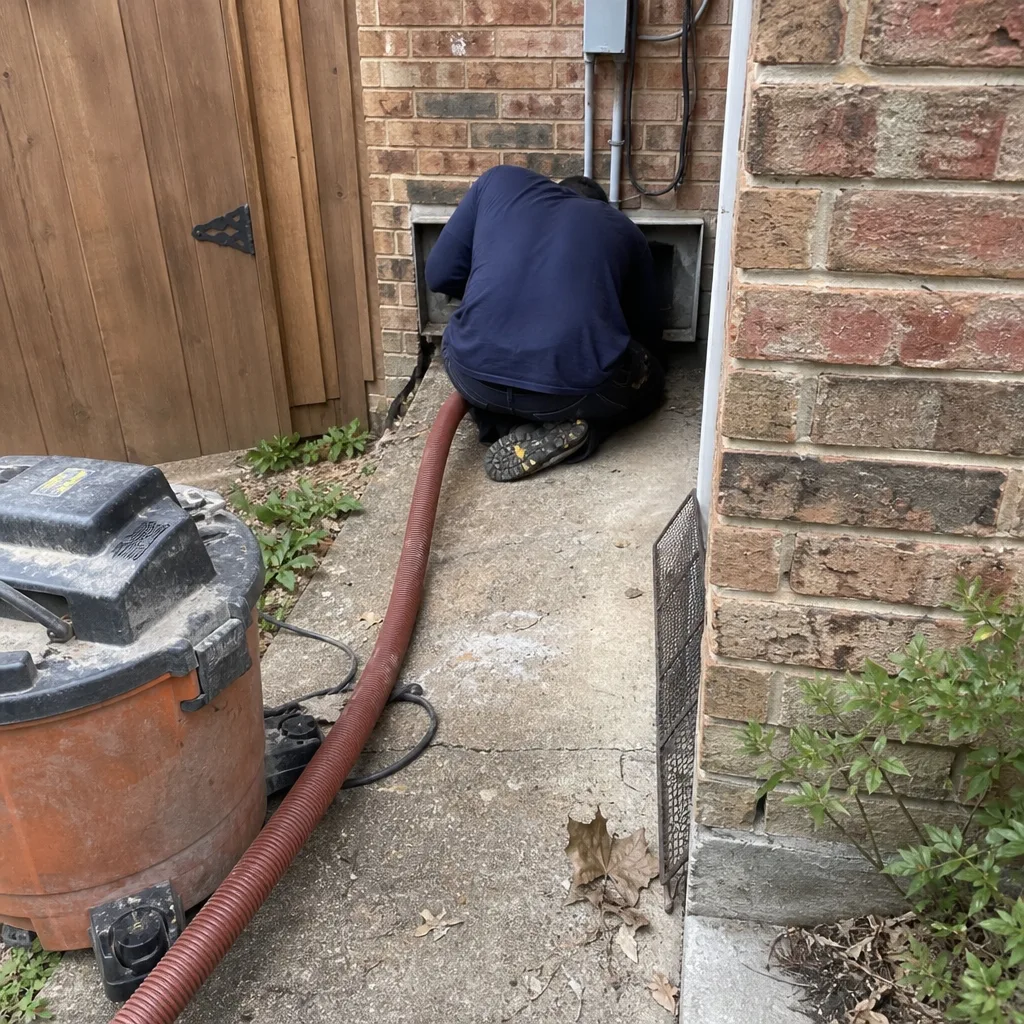 Before
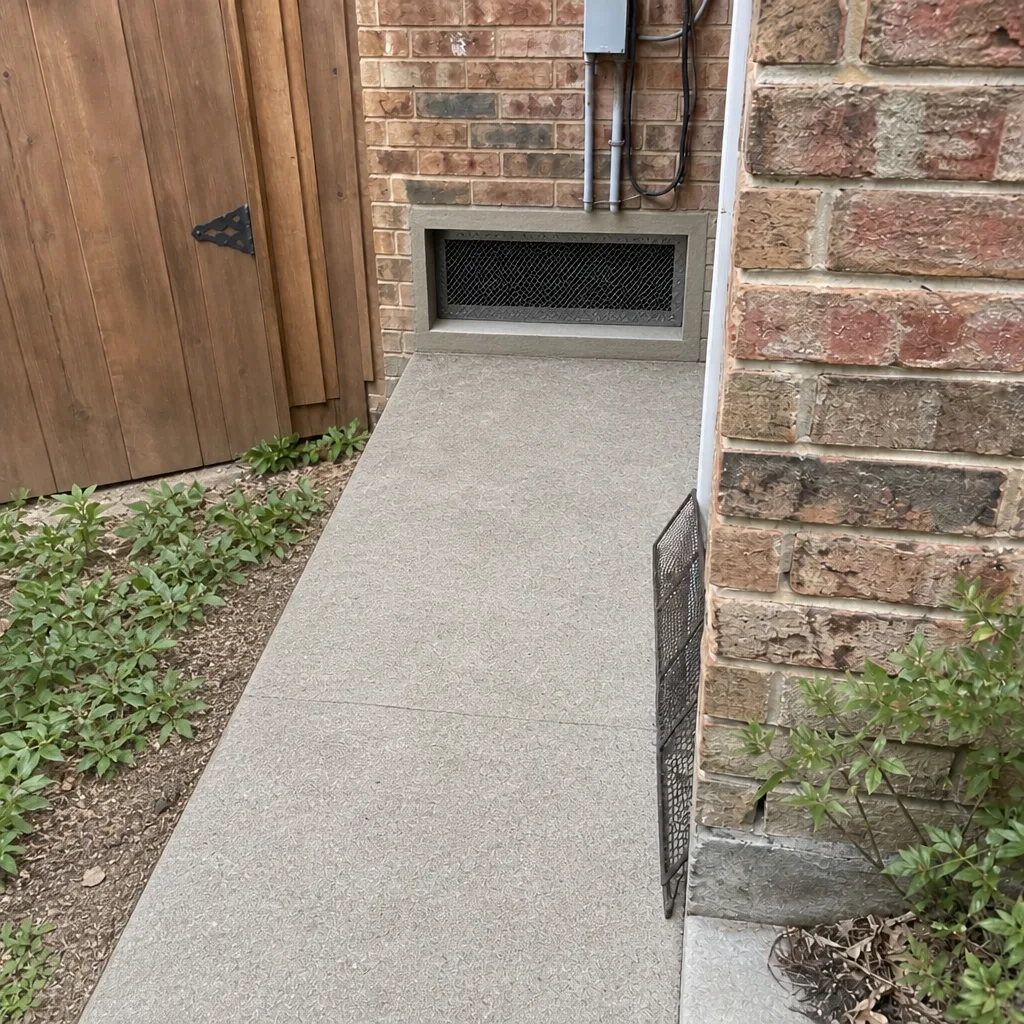 After
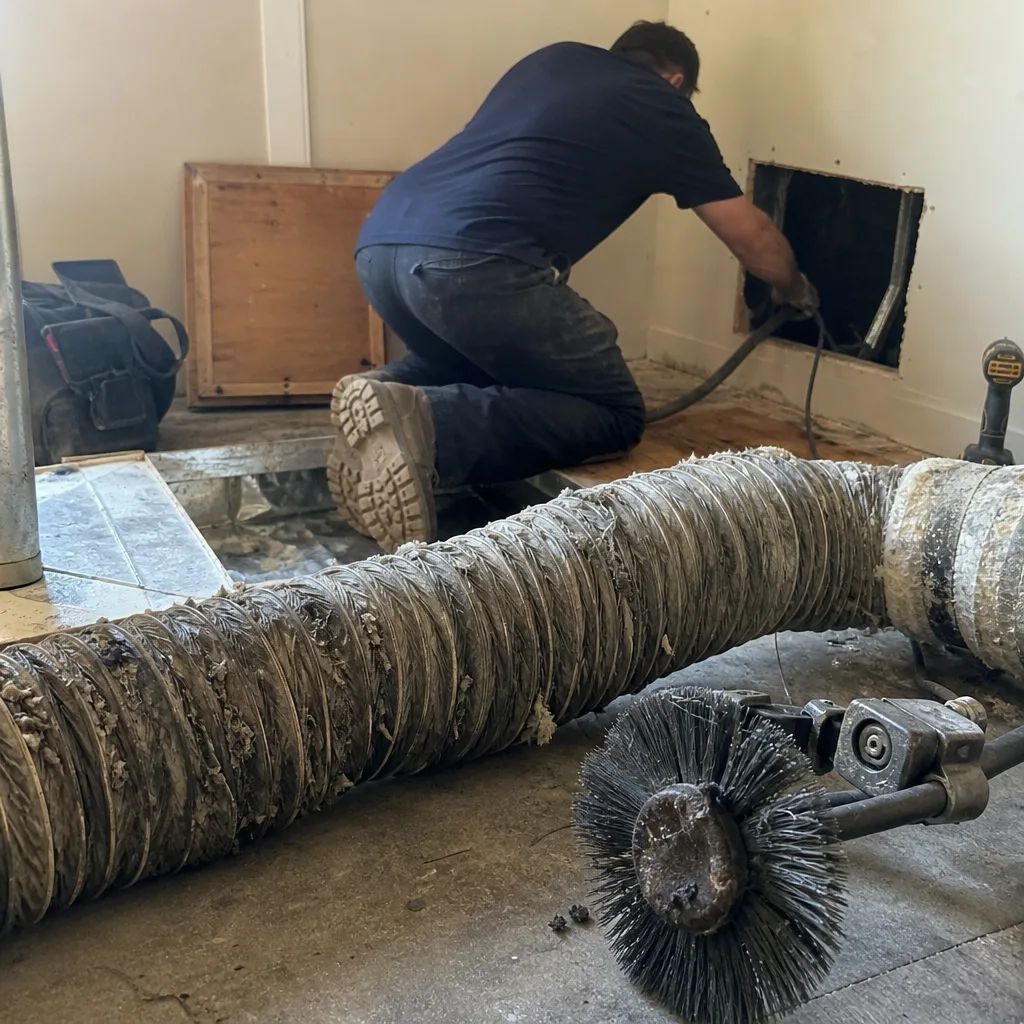 Before
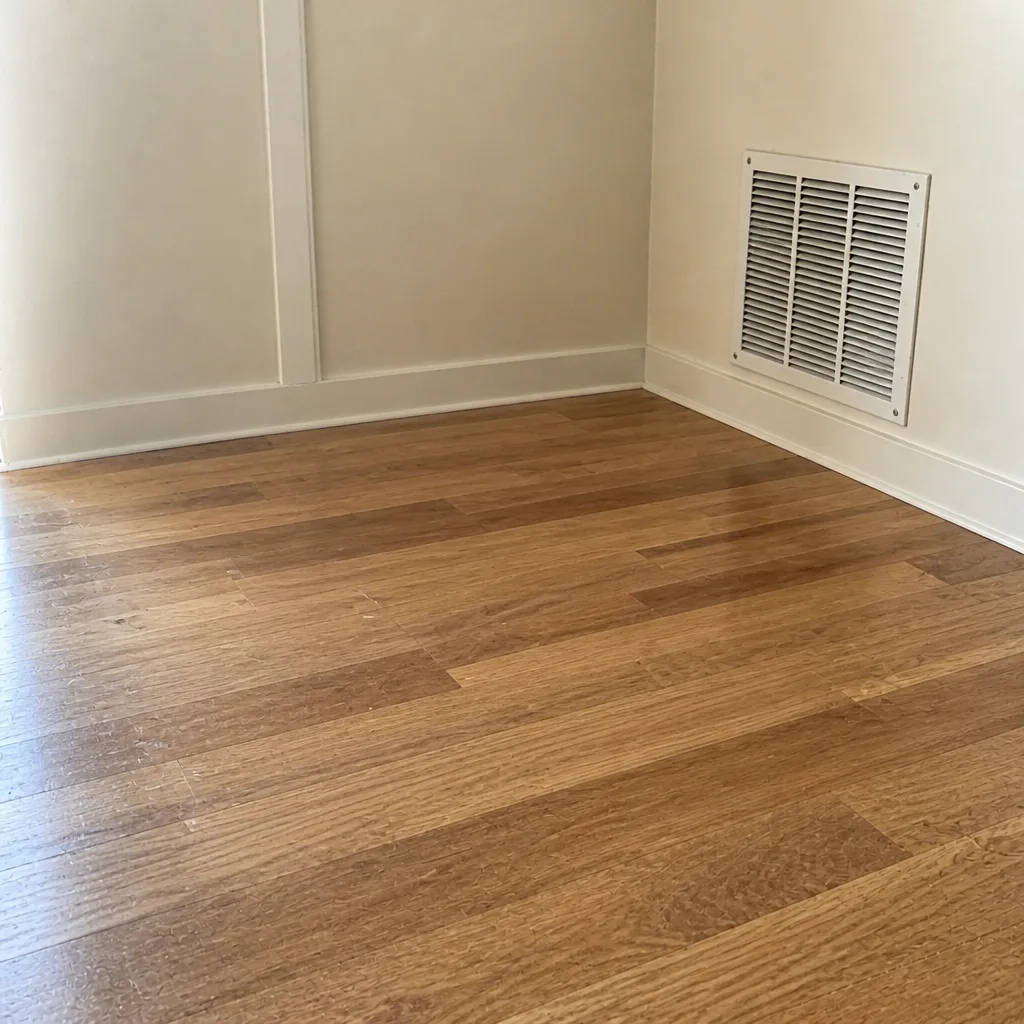 After
When to Call a Professional
Not every dusty register means you need a full duct cleaning. Here’s when it’s worth bringing in a specialist rather than waiting for the problem to grow.
- Visible dust blowing out of supply registers right after a filter change.
- A recent inspection flagged contamination, debris, or a damaged section of ductwork.
- Mold smell or a persistent musty odor in the house that doesn’t respond to ventilation.
- Recent construction or renovation in the home, which pushes drywall dust into the return side.
- A dryer that takes noticeably longer to dry than it used to (a sign of lint accumulation in the vent).
- An HVAC system that’s running longer to reach the same set point, suggesting restricted airflow.
- A home purchase where the seller has no record of the ducts ever being cleaned.
Our technicians have up to 12 years of experience with these systems, and we carry Abatement Technologies equipment for jobs that go beyond routine cleaning. Paragon Air Duct Cleaning offers free estimates in Arlington. Call (844) 787-8766 and we’ll walk through what your system needs.
Frequently Asked Questions
Most whole-system cleanings in Arlington fall within a broad range that depends on the number of trunk lines, the length of the ductwork, and whether repair or dryer vent work is bundled in. Contractors should give you a written, whole-system price rather than a per-vent quote. Be wary of any quote that doesn’t come after a real inspection. Call (844) 787-8766 for an exact quote. Estimates are free.
No, Texas does not currently license air duct cleaning businesses. That’s why the vetting falls to the homeowner, and why the equipment and process questions in this guide matter more here than in a licensed state. Ask for a certificate of insurance and NADCA membership details rather than trusting the phrase “licensed and insured.”
Cheap quotes usually exclude something important: mechanical agitation, the access port, the trunk line cleaning, or the repair work you’ll need once a proper inspection finds gaps. The low number often becomes a larger one once work starts. Compare total scope and equipment, not headline price. Call (844) 787-8766 for an honest whole-system quote in Arlington.
Cleaning removes accumulated debris from inside the ductwork. Repair fixes the structural problems, like seam gaps, tears in flexible duct, and collapsed sections, that let contamination in and leak conditioned air out. Most contractors offer cleaning only. A repair-capable contractor can address both in the same visit. Call (844) 787-8766 if you need help identifying which one you’re dealing with.
Ask for before-and-after photos from inside the main trunk line, not a photo of a floor register, and video inspection if the contractor uses a camera. A qualified Arlington contractor can produce both without a fuss. If a contractor can’t, treat that as a red flag. Call (844) 787-8766 if you’d rather start with a contractor who documents the work this way.
Most residential systems don’t need cleaning on a fixed schedule. The trigger is usually inspection findings: visible debris, an HVAC performance issue, recent renovation, or a home purchase with no history. Arlington’s dry, dusty summers mean return-side buildup can be faster than in wetter climates, but the calendar is a worse guide than an inspection. Call (844) 787-8766 for a free estimate if you’re unsure.
The Bottom Line
Hiring an air duct cleaning contractor in Arlington comes down to verification, not marketing. Texas doesn’t license the trade, which means the equipment questions, NADCA membership, written scope, and before-and-after trunk-line photos are the filter, not the fluff. The three equipment questions (CFM, agitation tools, access port placement) will separate a qualified contractor from a coupon operator faster than any review count. And a whole-system price agreed in writing before work starts is the single best protection against the bait-and-switch that gives this industry its reputation. Run the nine-step checklist, insist on trunk-line documentation, and you’ll know exactly what you’re paying for before anyone touches your ductwork.
At Paragon Air Duct Cleaning, we work to that standard on every job: professional-grade equipment from Rotobrush, Nikro, and Abatement Technologies, one flat price per system agreed before work starts, and before-and-after photos of your own ducts at the end. We don’t just clean, we repair. If you’re ready to talk through what your Arlington system needs, call (844) 787-8766 for a free estimate. We answer 24/7. Fast dispatch from 7am to 7pm, Sunday through Friday. You can also learn more about how we approach Paragon Air Duct Cleaning and the Arlington area we work in.
Written by the team at Paragon Air Duct Cleaning.